Cosmic Horizons 2026: Uniting Astronomers and AI Experts at NSF NRAO
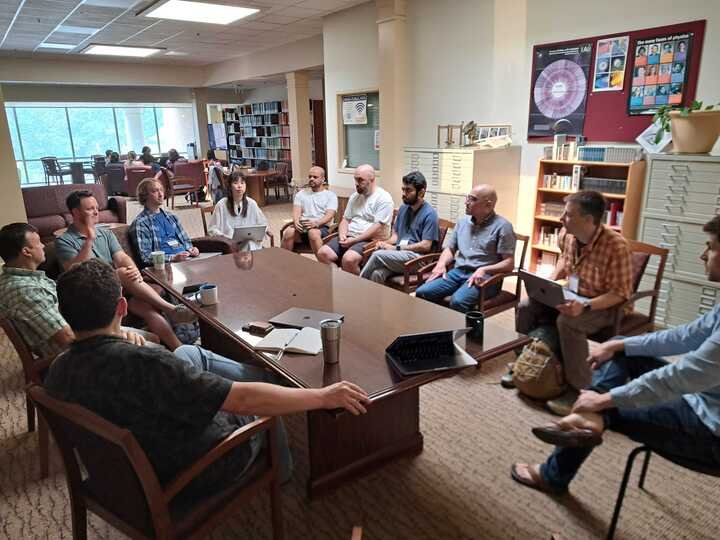
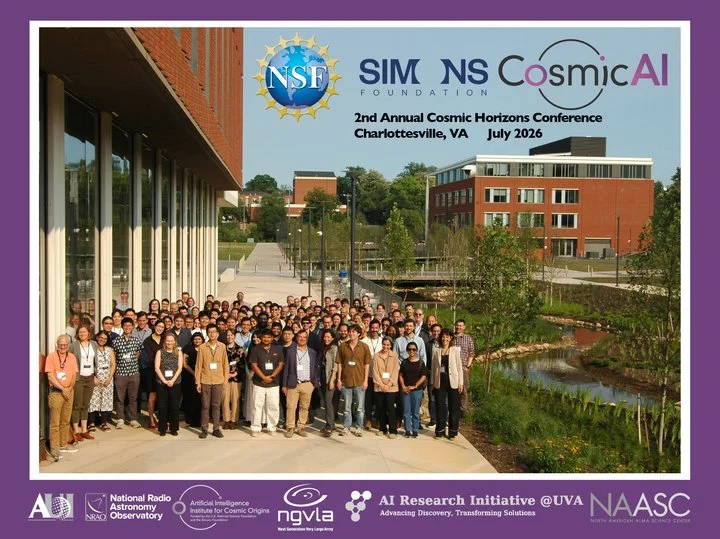
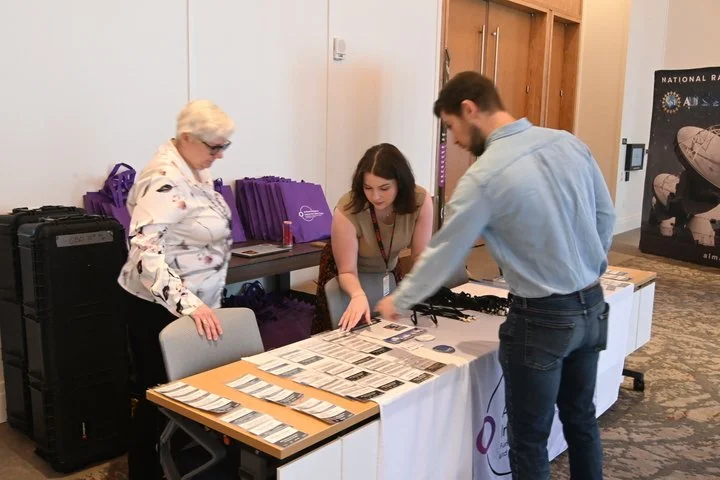
The NSF-Simons AI Institute for Cosmic Origins (CosmicAI) once again convened researchers in astronomy and artificial intelligence for its annual Cosmic Horizons Conference. This year, the NSF National Radio Astronomy Observatory (NRAO) hosted the three-day event in Charlottesville, VA, July 14-16, 2026.
The conference explored recent advances at the intersection of AI and astronomy - from improving the trustworthiness and interpretability of artificial intelligence (AI) and machine learning (ML) methods to preparing for the big-data challenges of next-generation observatories while also examining AI's growing role in proposal preparation, peer review, and paper writing.
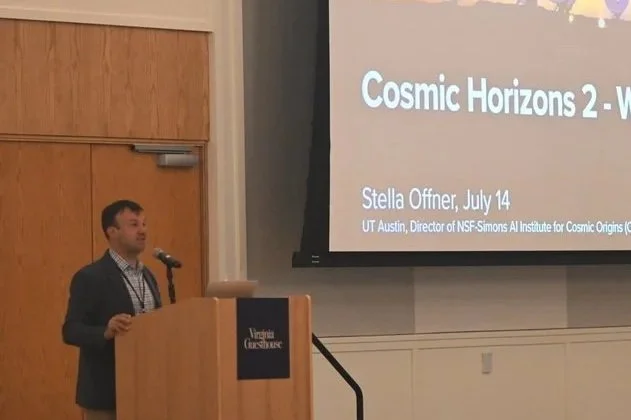
The conference included eight invited talks and over 50 sub-session presentations presented to 150+ attendees with topics ranging from real-time transient astrophysics and surrogate modeling of astrophysical systems to dark matter distribution, foundation models, and data-driven discovery across the light spectrum.
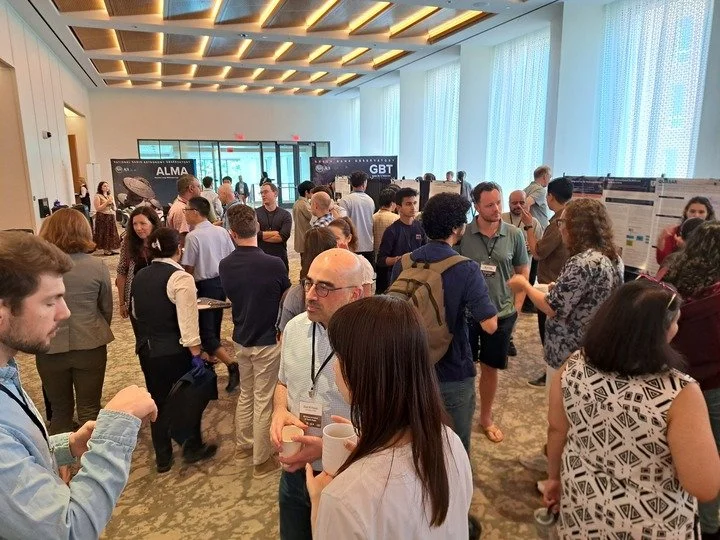
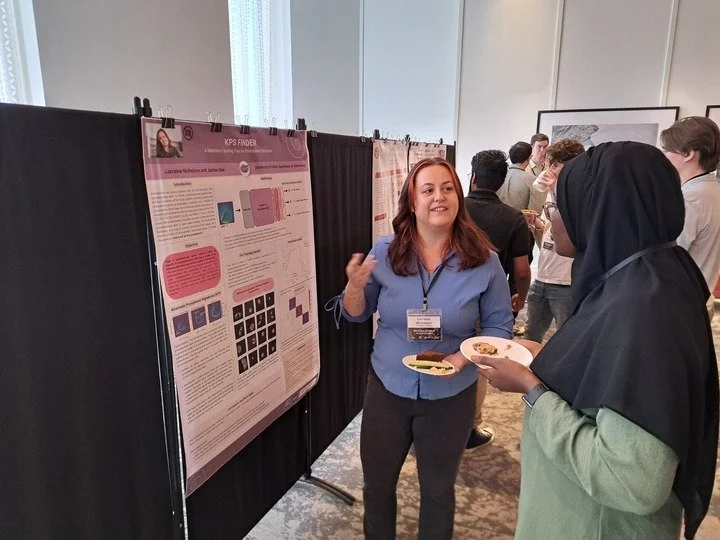
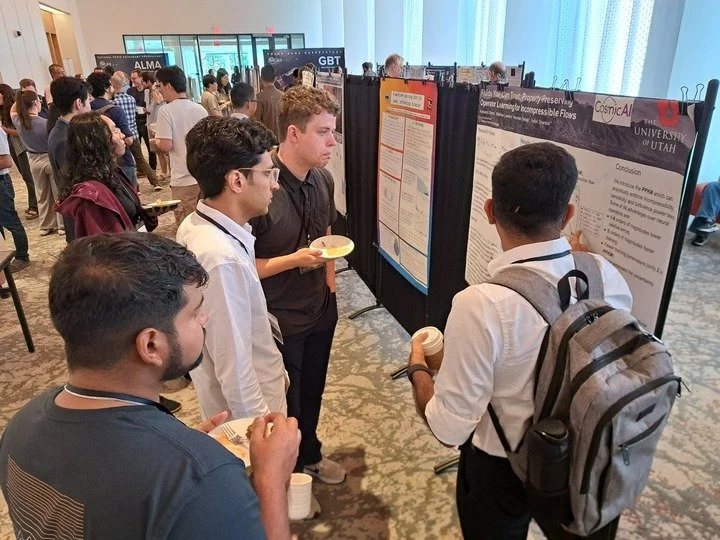
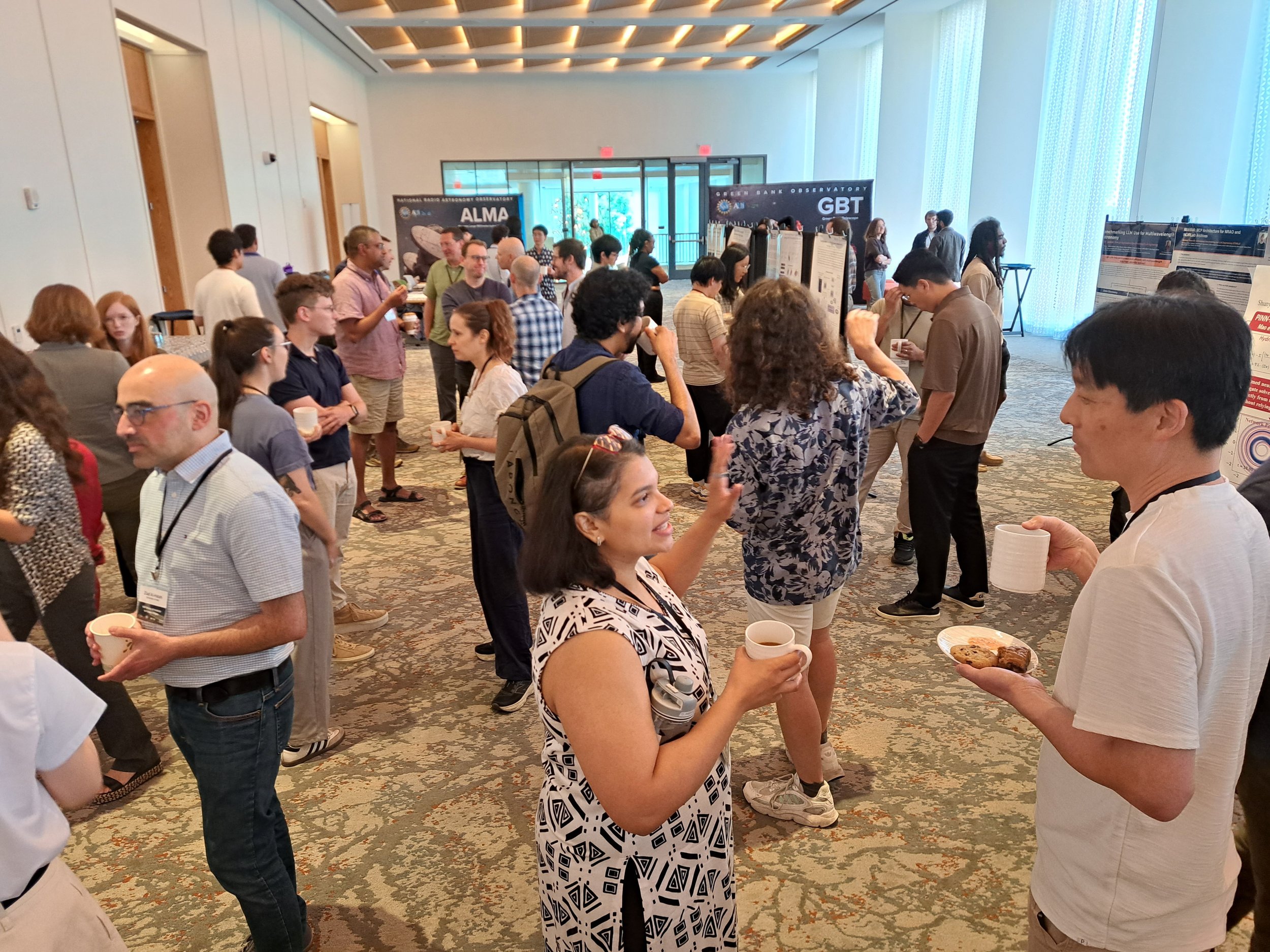
Two separate receptions were sponsored collectively by the AUI Board of Trustees, the next-generation Very Large Array (ngVLA), the North American ALMA Science Center, and AI@UVA to help facilitate active discussions amongst all meeting participants.
These poster and conference receptions gave attendees the opportunity to network with fellow researchers from over 45 different organizations across academia and industry, ranging from radio astronomy observatories like NSF NRAO, NSF-DOE Vera C. Rubin Observatory, NSF Green Bank Observatory, to institutions such as the NSF-Simons AI Institute for the Sky (SkAI Institute), Space Telescope Science Institute (STScI),The Institute for Data-Intensive Engineering and Science (IDIES) at Johns Hopkins University, and AstroAI Institute at the Harvard-Smithsonian Center for Astrophysics, to companies like Google, fostering the kind of interdisciplinary connections that drive progress at the intersection of AI and astronomy.
The conference underscored a shared commitment to bridging the gap between AI and astronomy, uniting researchers from both fields to tackle some of the most complex questions about our cosmic origins.
Eric Murphy (CosmicAI Co-PI and Tenured, Full-Astronomer at NSF NRAO) spoke on how the conversations evolved from the first conference to the second, stating, “It has been incredibly satisfying to see how all of the various Astronomy-AI research areas have matured so quickly over the past year. We are clearly at a point where both the Astronomy and AI communities are able to more fluently communicate with each other to advance their work. I really can’t wait to see how much further things will have evolved at Cosmic Horizons 3.”
A full list of conference speakers and panelists is available on the conference website.