Upcoming AI & Astronomy events
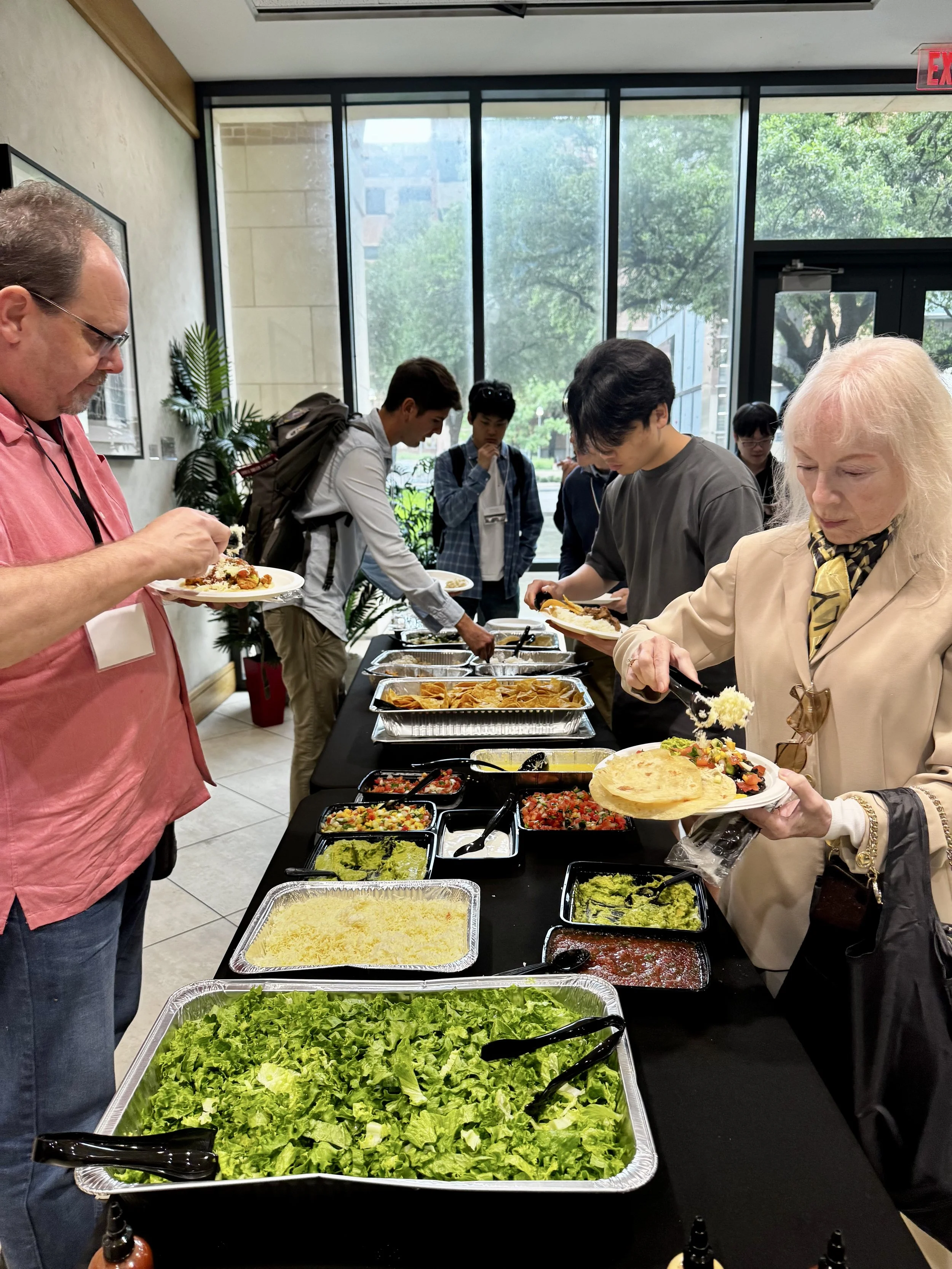
CosmicAI Team Pre-Seminar Lunch — UT Austin
12-1pm CT
Location: UT Austin at Peter O'Donnell Building (POB) 4.304
Pizza will be served for CosmicAI team and CosmicAI collaborators!
This is a space to connect with the team, whether you want to chat about your latest research, collaboration opportunities, or get to know each other better.
Hybrid Seminar - Accelerated Universe
Part 1: From astrochemical models to surrogate models: understanding the chemistry of star formation
Speaker: Mélisse Bonfand-Caldeira (Postdoc at the University of Virginia)
Part 2: Adaptive Tree Reduced-Order Model for Parametric Chemical Kinetics
Speaker: Arjun Vijaywargiya (Postdoctoral Fellow at The Oden Institute, University of Texas at Austin)
Part 3: Tree-based adaptive approximation
Speaker: George Biros (W. A. ``Tex'' Moncrief Chair in Simulation-Based Engineering Sciences in the Oden Institute for Computational Engineering and Sciences with Full Professor appointments with the departments of Mechanical Engineering and Computer Science (by courtesy) at UT Austin)
Link to Zoom & in person at UT Austin at Peter O'Donnell Building (POB) 4.304

Hot Science - Cool Talks
Hot Science – Cool Talks provides a front row seat to world-class research. Presented by the Environmental Science Institute (ESI), this nationally recognized series allows leading researchers from The University of Texas and other prominent universities to share their passion about science, technology, engineering and math with the general public. Events are held six times a year (on-campus or virtually).
From 5:30-7pm, CosmicAI will have a table of swag, pamphlets on the institute, and an AR visualization demo by Emma Nally (a researcher in Stella Offner's astronomy research group). Come chat with us, grab some swag, and learn about all things CosmicAI!
7pm: Talk begins
Location: Welch Hall on the UT Campus.
October 16th talk: AI and Your Best Self
Speaker: Dr. Kristen Grauman
Professor: UT Department of Computer Science
Register
Hybrid Seminar - Observable Universe
Speaker: Observable Universe Working Group
Location: NRAO
Hybrid Seminar - Explorable Universe
Speaker: Explorable Universe Working Group
Location: TBD
Hybrid Seminar - Explainable Universe
Speaker: Explainable Universe Working Group
Location: UT Austin
AAS Special Session - Advances in Foundation Models and Agentic AI for Astronomy
Description: Foundation models, most prominently large language models (LLMs), are rapidly revolutioning research tasks, from ideation and writing, to coding and data analysis. Astronomy-specific foundation models, trained on carefully curated, massive archival datasets, are providing new approaches for wrangling, exploring, and analyzing current and next-generation surveys. Meanwhile, AI agents, built on top of these models, are achieving previously unimaginable gains in autonomy and complex reasoning. This rapidly evolving AI landscape offers enormous potential to accelerate astronomy research tasks and may ultimately create a new paradigm for how astronomers interact with data and make discoveries.
Speakers
AI agents for astronomy: the best and the worst (Francisco Villaescusa-Navarro)
Do foundation models see the same sky? (Mike Smith)
Enabling scalable multimodal foundation model training with HATS/LSDB (Rachel Mandelbaum)
Training Scientists in the Age Of Agents (Eytan Adar)
Location: Salt Lake City at the Salt Palace Convention Center
Cosmic Horizons Conference 2027 (Astronomy + AI Conference)
3rd Annual NSF-Simons AI Institute for Cosmic Origins Science Conference
The recent revolution in AI is fundamentally changing how astronomers observe, explore, analyze, and model astronomical data. The Cosmic Horizons Conference aims to bring together researchers who are actively developing and applying AI/ML methods in astronomy.
Building on the success of last year’s conference, which included eight invited talks and over 50 sub-session presentations presented to 150+ attendees and fostered interdisciplinary dialogue across artificial intelligence, machine learning, and astronomy, the upcoming conference will continue to center the needs and ideas of the scientific community as well as provide updates on the Institute's progress and the opportunity to discuss how CosmicAI may best serve the community.
Location: University of Utah
More details coming soon…
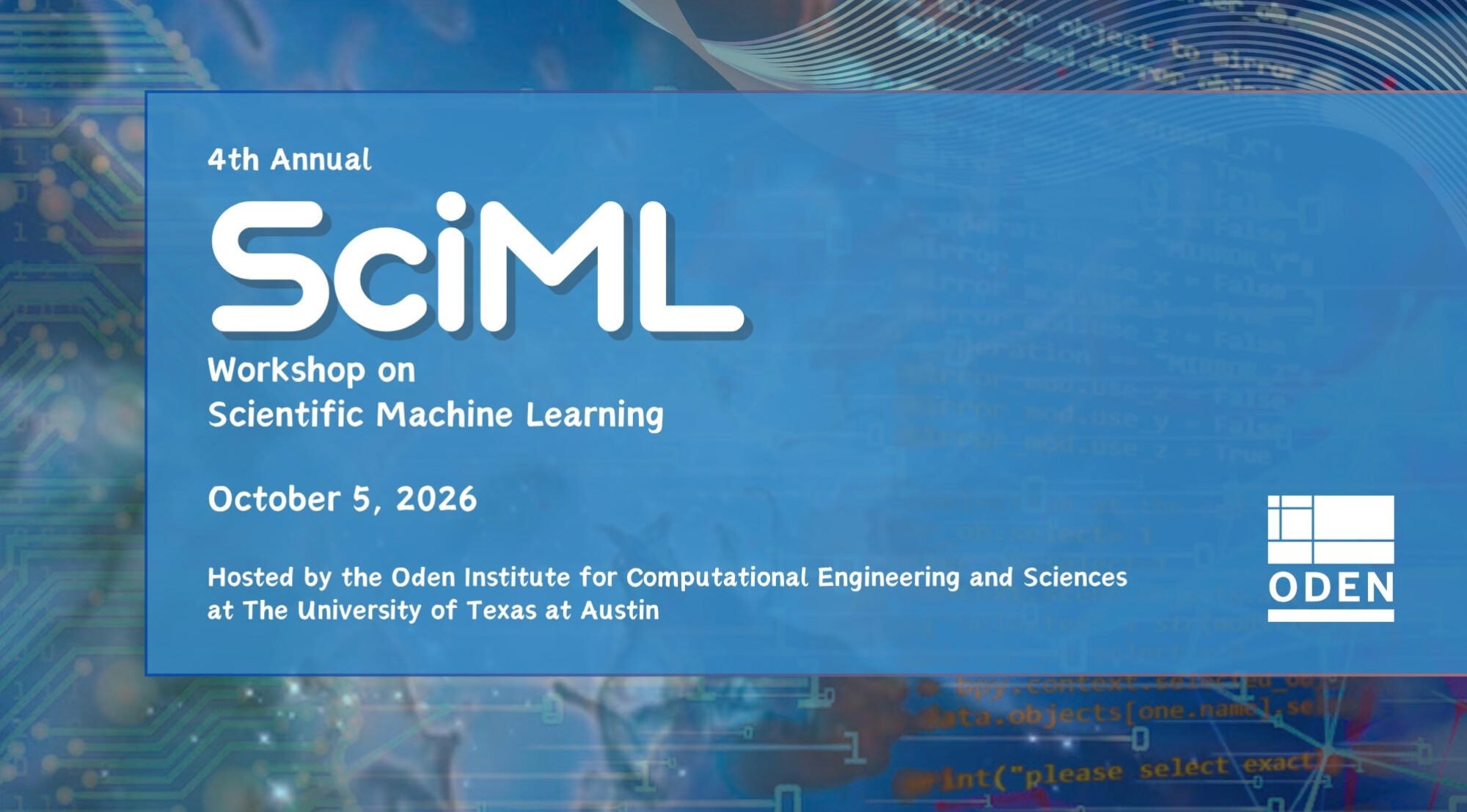
4th annual SciML (Workshop on Scientific Machine Learning)
Scientific Machine Learning is an emerging research area focused on the opportunities and challenges of machine learning in the context of complex applications across science, engineering, and medicine. The second annual workshop on Scientific Machine Learning, hosted by Dr. Stella Offner and Dr. Tan Bui-Thanh, will feature talks by experts spanning computational science and engineering and data-driven machine learning to foster collaboration and establish central challenges and research directions in SciML.
Dates and Location
Oden Institute’s third annual Workshop on Scientific Machine Learning will take place October 5, 2026 in the POB 6.304 at The University of Texas at Austin.
Hybrid Seminar - Tracking Topology in Continuous Models (Dr. Bei Wang Phillips) and Advanced Neural Operators (Dr. Shandian Zhe)
Part 1: Structure Without a Grid: Extracting and Tracking Topological Features in Continuous Models of Scientific Data
Speaker: Dr. Bei Wang Phillips (Associate Professor at University of Utah)
Part 2: Enhancing Operator Learning with Invertible Architectures and Multi-Functional Diffusion
Speaker: Dr. Shandian Zhe (Associate Professor at Kahlert School of Computing, University of Utah)
12pm-1pm MT (1pm-2pm CT)
Zoom & in person at University of Utah WEB 3780 (Evans Conference Room)!
Using LLMs to Orchestrate Radio Interferometric Data Reduction
Speaker: Krishna Sekhar, NRAO
1800 UTC; 12pm MT, 1pm CT, 2pm ET
We present an architecture for LLM-driven radio interferometric data reduction. The overarching idea is to use an interface to the LLM (a "harness") which will drive the processing via CASA. We achieve this by defining a Model Context Protocol (MCP) layer, which is a thin Python layer that wraps CASA. The MCP exposes various Measurement Set operations - metadata queries, flagging, calibration and imaging as independent tools that return structured data with explicit completeness and provenance annotations. No tool interprets or chains it's outputs to another. The reasoning is supplied via SKILL documents - version controlled natural language domain documents that encode interferometric expertise. The skills provide the context necessary for the orchestrator to define pass/fail criteria for each stage of the processing in an adaptable manner. The orchestrator uses the MCP and skills to route the model through a workflow, allowing for human checkpoints at pre-defined points for inspection. The decisions, parameters and choices are all persisted for inspection and validation, we do not blindly trust the LLM output.
We demonstrate "radio-analyst" - a Claude Code based interface to the underlying MCPs that enable natural language driven processing of radio interferometric data. We show successful calibration runs on various EVLA datasets (3C391, G55). We discuss upcoming work to develop a custom harness that allows for more flexibility (to use open-weight models, and multi-dataset orchestration).
Zoom info:
https://go.nrao.edu/soaudzoom
Audio-only: +1 646 876 9923
Meeting ID: 675 659 4969
Passcode: 787787
Hybrid Seminar - Real time Bayesian inversion, prediction, and OED for tsunami early warning
Speaker: Omar Ghattas (Professor, Walker Department of Mechanical Engineering and Oden Institute, University of Texas at Austin)
Location: UT Austin POB 4.304 and Zoom

CosmicAI Coffee & Connect - Oden Institute Coffee Hour
Please join the CosmicAI team for the Oden Institute Coffee Hour September 14th from 9:30–10:30 AM in the 6th Floor Faculty Lounge (POB 6.102).
Coffee Hour is an opportunity to connect with colleagues across the Institute, learn about ongoing activities and research, and strengthen our community. We encourage students, staff, researchers, and faculty to join us for conversation and light refreshments!
Penetrating the Confusion Limit of Rubin LSST with Knut Olsen (NOIRLab), Alexander Wohlberg, Sarayu Gadi, and Jixian Li
Knut Olsen (NOIRLab), Alexander Wohlberg, Sarayu Gadi, and Jixian Li
Penetrating the Confusion Limit of Rubin LSST
Please join us for a project update from the Explorable Universe Working Group on September 11, at 12 PM MST (12 PM PDT/3 PM EDT)
Hybrid Seminar - Emulators for Asteroseismology and Physics Based Deep Learning for Stellar Structure Equations
Part 1 - Emulators for Asteroseismology
Speaker: Earl Bellinger (Assistant Professor at Yale University)
Part 2 - Physics Based Deep Learning for Stellar Structure Equations
Speaker: Manuel Ballester (Wyant College of Optical Sciences, University of Arizona)
Location: UT Austin POB 4.304 and Zoom
Astronomy Colloquium -Probing the physics of the early universe with pulsating stars with Earl Bellinger (Yale University)
Speaker: Earl Bellinger - (Assistant Professor at Yale University)
PMA 15.216B
Title: Probing the physics of the early universe with pulsating stars
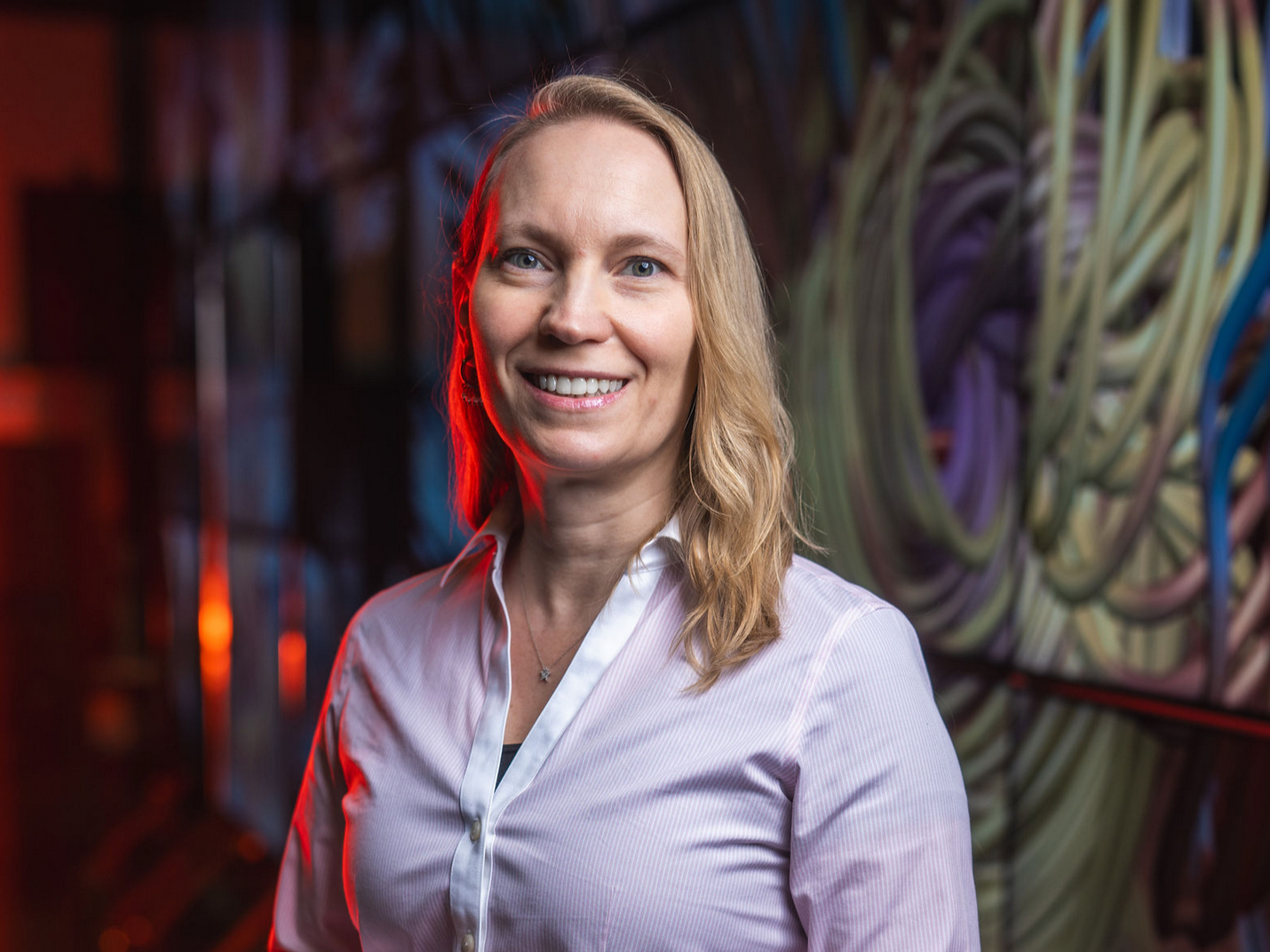
Hybrid Seminar - Welcome & 2026 Director’s Report: NSF-Simons CosmicAI through Year 2 and Beyond
1-2pm CT / 2-3pm ET
Location: UT Austin POB 4.304 and Zoom
Description: This seminar is intended both for the CosmicAI community and for anyone interested in learning more about CosmicAI. I will review the CosmicAI Institute vision, mission and core research areas. I will reflect on our accomplishments during the past two years and discuss how CosmicAI research is advancing AI methods and working to transform how astronomers analyze data, observe the universe, and accelerate workflows. I will describe our community initiatives and AI educational programs. In closing, I will reflect on our year three plans and discuss opportunities to join the CosmicAI mission.
Speaker: Dr. Stella Offner (Curtis T. Vaughan Jr. Centennial Chair in Astronomy at the University of Texas at Austin and CosmicAI PI & Director)
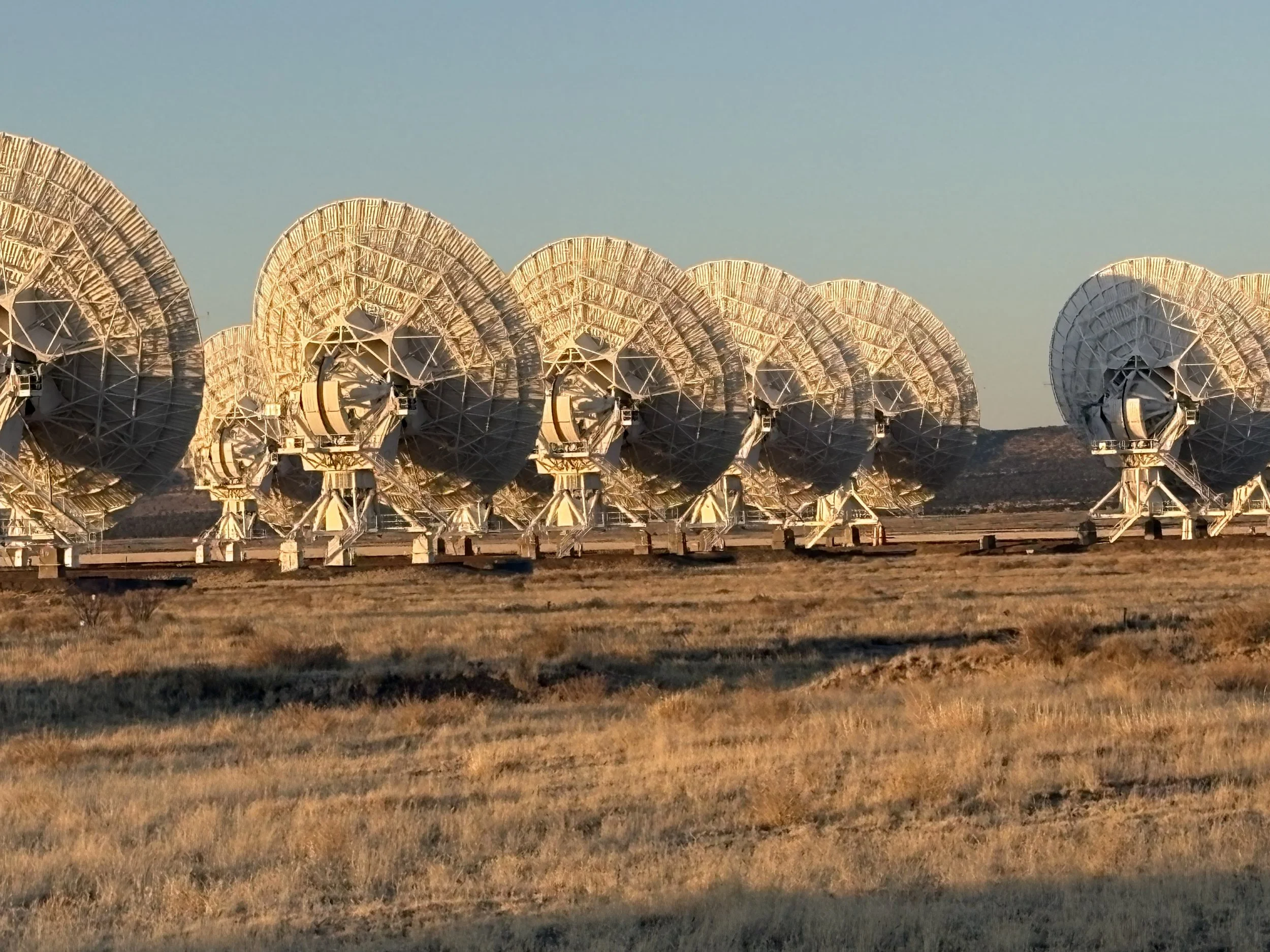
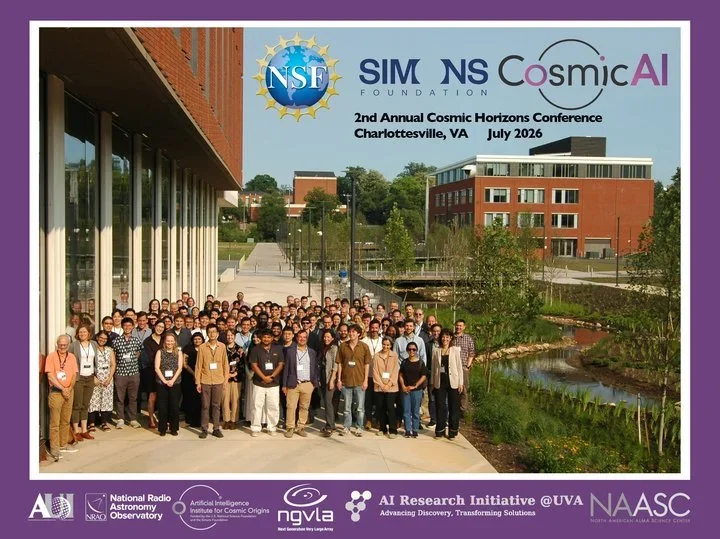
Cosmic Horizons 2026 (Astronomy + AI Conference)
The 2nd Annual NSF Simons AI Institute for Cosmic Origins Science Conference (Cosmic Horizons) will bring together researchers who are actively developing and applying AI/ML methods in astronomy.
The Conference will be held at Charlottesville, Virginia at The Virginia Guesthouse on July 14th-16th 2026.
See our Conference website for more information
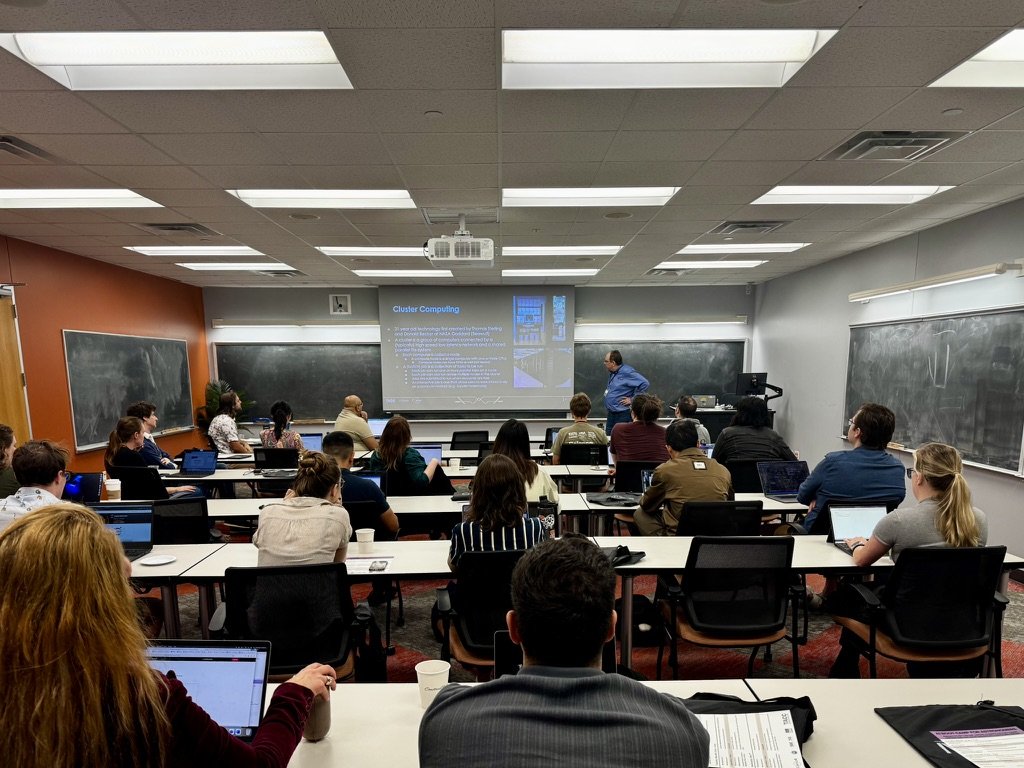
AI Boot Camp for Astronomers
Hands-on AI training for the next generation of astronomy research on June 1 - June 5, 2026, at Pickle Research Campus, University of Texas at Austin.
The AI Boot Camp For Astronomers is a weeklong, immersive training experience designed to help researchers build practical AI skills for astronomy.
CosmicAI collaborative event! Harrington Faculty Fellows Symposium 2026 “Large Language Models: Advances and Applications.”
This day-long symposium will bring together experts from around the country and across campus to discuss advances in Large Language Models (LLMs), with a particular focus on their applications to scientific workflows, robotics and linguistics.

Spring 2026 CosmicAI Seminar Series Talk #8
Part 1: How close are language models to becoming autonomous and trustworthy scientists?
Speaker: Peter Jansen (Associate Professor at the University of Arizona, and Visiting Research Scientist at the Allen Institute for Artificial Intelligence
Part 2: Will Humans Make the Greatest Astronomy Discoveries of the Future?
Speaker: Ann Zabludoff (Professor of Astronomy, University of Arizona)
Spring 2026 CosmicAI Seminar Series Talk #7
Active Galactic Nuclei Multi-Wavelength X-ray Spectral Analysis Using Neural Networks
Presenter: Professor Shiqi Yu (Research Assistant Professor, Department of Physics and Astronomy, University of Utah)
Controlling LLM's via Activation Geometry
Presenter: Amirali Abdullah (Lead AI Researcher, Thoughtworks Inc)

Spring 2026 CosmicAI Seminar Series Talk #6
Short Stories of AI in, and for, Astronomy
Speaker: John Wu, Associate Astronomer and Applied AI Scientist, the Space Telescope Science Institute.
Cosmic Co-Discovery with AI
Speaker: Dr. Ioana Ciuca, Interdisciplinary Researcher, Department of Astrophysics and Computer Science, Stanford and co-founder, UniverseTBD
Spring 2026 CosmicAI Seminar Series Talk #5
Encoding the nearby Universe: a unified observational picture of nearby galaxies across wavelength and scale
Speaker: Dalya Baron, Research Scientist, Stanford University.

SXSW 2026: Revolutionizing Astronomy with Next Generation Big Data
Massive datasets, like those in astronomy, are the lifeblood of AI innovation. The panel, led by researchers from the NSF-Simons AI Institute for Cosmic Origins, will discuss how AI is transforming astronomy to unlock new insights into the origins of our universe. They will present visualizations showing state-of-the-art astronomical datasets built on flagship observations and supercomputing simulations of the Universe. They will discuss how these data can be used to develop novel AI methods that accelerate discovery, expanding the frontiers of AI possibility inside and outside astronomy.

Spring 2026 CosmicAI Seminar Series Talk #4
LLM Reasoning Beyond Scaling
Presenter: Dr. Greg Durrett, Associate Professor, Department of Computer Science and the Center for Data Science, New York University.
Cosmo3DFlow: Powering the Digital Twin of the Universe
Presenter: Dr. Judy Fox, Associate Professor, School of Data Science, University of Virginia.
Texas Science Festival: AI Among the Stars: How Machines Help Us Explore the Universe
Explore how AI and next-gen telescopes are transforming astronomy, data analysis, and discovery through research at UT Austin’s CosmicAI.
Time: 1 PM - 2 PM
Location: Peter O'Donnell Building, Avaya Auditorium, Room 2.302, 201 E. 24th Street
Closest Parking: San Jacinto Garage

Spring 2026 CosmicAI Seminar Series Talk #3
Olmo 3: State-of-the-art in fully open models
Presenter: Kyle Lo, Lead Research Scientist, Allen Institute for AI (AI2)
AI-Assisted Peer Review at Scale: The AAAI-26 AI Review Pilot
Presenter: Joydeep Biswas, Associate Professor, Department of Computer Science, The University of Texas at Austin
Spring 2026 CosmicAI Seminar Series Talk #2
Responsible AI for Science: Assessing Potential Benefits vs. Risks
Presenter: Dr Matthew Lease, Professor of Information, UT Austin & Co-Director, CosmicAI.
Who Owns Creativity and Who Does the Work? Trade-offs in LLM-Supported Research Ideation
Presenter: Houjiang Liu, PhD student, School of Information, UT Austin.
——————————————-
Venue: POB 4.304 at the Oden Institute (201 E. 24th Street), UT Austin.
Date: Wednesday, February 04, 2026.
Spring 2026 CosmicAI Seminar Series Talk #1
From Astronomical Data to Knowledge: A Few Unexpected Insights from Machine Learning
Presenter: Stephanie Juneau, NOIRLab
Foundation Models for Survey Astronomy
Presenter: Francois Lanusse, CNRS
Time: 11 AM - Noon CST (10 AM MST)
Date: Wednesday, January 21, 2026
Location: Main Conference Room (MCR), NOIRLab
CosmicAI & SkAI Special Session at the 247th AAS Meeting
CosmicAI & SkAI Special Session at the 247th AAS Meeting
2:00 PM - 3:30 PM MST
Tuesday, January 6, 2026.
Location: Phoenix, AZ.
Title: Advancing AI Infrastructure for Large Astronomy Datasets.
Fall 2025 CosmicAI Seminar Series Talk #7
Light Scattering of Irregular Grains with Neural Networks
Presenter: Zhé-Yǔ Daniel Lín
Towards AI-driven Radio Image Reconstruction
Presenter: Omkar Bait
You Might Also Like These Images: Unsupervised Affine-Transformation-Independent Representation Learning for the ALMA Science Archive
Presenter: Felix Stoehr
Time: Noon - 1:00 PM EST
Location: CV-230 at NRAO
Zoom: Click to Join
Fall 2025 CosmicAI Seminar Series Talk #6
DESI: Disentangling Cosmology from Observational Artifacts
Presenters: Kyle Dawson - Professor - Department of Physics and Astronomy (University of Utah) and Tyler Hagen, Ph.D. Candidate, University of Utah
11 AM CT / 12PM ET
Venue: Zoom and in person at the University of Utah (WEB 3780 - Evans Conference room in SCI)
Zoom: Click to Join
Fall 2025 CosmicAI Seminar Series Talk #5
Part 1:
Title: Finding Exotic Transients in the Era of Big Data
Speaker: Sebastian Gomez (Assistant Professor of Astronomy at The University of Texas at Austin)
Part 2:
Title: Time-Series Modeling of High-Resolution Radio Spectra
Speaker: Josh Taylor (Research Associate, Oden Institute)
Venue: UT Austin (POB 6.304) Breakfast tacos to be served!!
11 AM CT / 12PM ET
Part 1 Recording
Part 2 Recording
Part 1 Abstract: Time domain astronomy, or the study of the dynamic universe on human timescales, stands at the forefront of a revolution fueled by the advent of large surveys. We have recently experienced an unprecedented influx of observations that led to the discovery of exotic transients such as superluminous supernovae or tidal disruption events. The upcoming deployment of next-generation survey telescopes, such as the Vera C. Rubin Observatory and the Nancy Grace Roman Space Telescope, will increase our transient detection capabilities by two orders of magnitude. Developing machine learning techniques will prove to be not only useful, but necessary, to deal with the deluge of data we will obtain from these observatories, promising deeper insights into known cosmic phenomena and the exciting prospect of discovering entirely new classes of transients.
Part 2 Abstract: We present a modeling technique to characterize high-resolution radio spectra based on ARIMA (AutoRegressive Integrated Moving Average) modeling from statistical time series analysis. ARIMA isolates the dependence of a spectrum's shape upon both its signal and structured noise components, making fewer assumptions about a spectrum's velocity structure than standard Gaussian component fitting, and is intended to serve as a complement to the latter. Structural dependence modeling can: improve summary moment calculations, provide alternative approaches to signal noise estimation (which can be modeled channel-wise if desired), and help characterize the provenance of any observed structure in a cube's spectra (as signal, structured noise, or white noise). ARIMA modeling is computationally lightweight, backed by statistical theory and, as a first step to an analytical pipeline, can inform further downstream tasks such as identifying when Gaussian component fitting is appropriate.
Speaker Bios
Sebastian Gomez: Since August 2025, I have been an Assistant Professor of Astronomy at The University of Texas at Austin. Previously, I was a Clay postdoctoral fellow at the Center for Astrophysics | Harvard & Smithsonian and an STScI postdoctoral fellow at the Space Telescope Science Institute, where I split my time working with exotic transients with the Transients Science @ Space Telescope group and the Roman Space Telescope. I graduated with a PhD in Astronomy & Astrophysics in 2021 from Harvard University, where I worked with the Berger Time Domain Group on the discovery and classification of exotic supernovae, particularly on the optical study of superluminous supernovae and tidal disruption events, as well as machine learning techniques to find these objects more efficiently. I am originally from Ciudad Juárez, México. I attended college nearby at The University of Texas at El Paso and finished with a degree in Physics in 2015. While at UTEP I focused on the study of X-ray binaries, especially on the discovery of new galactic black hole X-ray binaries. In my spare time I like to do archery and photography.
Josh Taylor is a Research Associate in the Oden Institute for Computational Engineering and Sciences at The University of Texas at Austin. His research advances unsupervised machine learning methods for use in unbiased, data-driven exploratory, summary, and inferential analysis of astrophysical data; in particular, of data arising from observations and simulations of the star formation process. Dr. Taylor received his PhD in statistics from Rice University.
Fall 2025 CosmicAI Seminar Series Talk #4 - Encoding of Spectra and Time Series and Strategies for variance reduction in spectral unmixing
Part 1:
Title: Encoding of Spectra and Time Series
Speaker: Peter Melchior (Assistant Professor of Statistical Astronomy, Princeton University)
Part 2:
Title: Strategies for variance reduction in spectral unmixing Speaker: Jordan Bryan (Assistant Professor of Data Science, UVA)
Venue: Room 201 of UVA's Astronomy Building (530 McCormick Rd.)
Pizza will be served!
11 AM CT / 12PM ET
Part 1 Recording Link here
Part 2 Recording Link here
Subscribe to the CosmicAI Calendar
Part 1 Abstract: Ongoing and future surveys will surprise us, but only if our methods have the speed and flexibility to take advantage of vast quantities of data. I will present a neural network architecture that is specifically designed for galaxy spectra at variable redshifts. It is trained with an invariance-promoting loss function and can create superresolution reconstructions and infer the physical properties of galaxies with few-shot learning. The representations of optical spectra provide accurate prediction of IR photometry, a connection that is not captured by current physical spectrum modeling methods. I will discuss extensions of this work to exoplanet and quasar spectra to demonstrate the strengths and versatility of this approach.
A very similar encoder-decoder architecture can be taken for the modeling of time series, but I will add another component: a Latent ODE model describes temporal evolution as the solution of a differential equation, which is discovered from the data. I will demonstrate the use of this method for exoplanet detection and what it reveals about the training dynamics of deep neural networks.
Part 2 Abstract: Spectral data arise in many scientific fields including biology, environmental monitoring, and astronomy. Physical laws and simplifying statistical assumptions motivate the idea that a mixed spectrum is approximately a linear combination of several constituent spectra. In the problems we consider, the constituent spectra are derived from chemical components with known labels, while the non-negative weights of the linear combination represent the abundance of these chemicals in the mixture. In this context, we propose strategies for using a dictionary of labeled spectra to estimate the abundance weights. The estimates we propose leverage statistical characteristics of spectral data in order to achieve lower variance than standard alternatives. We illustrate the use of these estimates on fluorescence spectroscopy measurements for water quality monitoring. Finally, we discuss the limitations of our approach as well as outstanding statistical questions, particularly as they relate to applications in astronomy such as quasar absorption line spectroscopy.
Bios:
Prof. Peter Melchior leads the Princeton Astro Data Lab, which develops new algorithms to solve problems that hold back astronomy. His group seeks to optimally extract information about astrophysical processes with novel techniques that combine physics principles with deep learning. He creates methods for signal separation, data fusion, fast inference, and outlier detection for large astronomical surveys, and is funded by NSF, NASA, the Keck Foundation, and the Schmidt Sciences Foundation.
Jordan Bryan is a statistician with broad expertise in multivariate data analysis. He has studied and developed statistical methods in the fields of environmental monitoring, high-energy physics, and cancer genomics. His research interests include Bayesian statistics, robust estimation, and information-assisted hypothesis testing.
Prior to joining the faculty at UVA, he was a postdoctoral researcher at the University of North Carolina at Chapel Hill, where he was supported by training grants from the National Institute of Environmental Health Sciences (NIEHS) and the National Heart Lung and Blood Institute (NHLBI). He also worked as an associate computational biologist at the Broad Institute of MIT and Harvard. As of January 2024, he is the Secretary of the junior section of the International Society for Bayesian Analysis. He received his Ph.D. in Statistics from Duke University in 2023.
Fall 2025 CosmicAI Seminar Series Talk #3 - Machine Learning for Reviewer-Proposal Matching in ALMA Distributed Peer Review and Compound AI Systems: How Publisher AI Helps Researchers
Part 1:
Title: Machine Learning for Reviewer-Proposal Matching in ALMA Distributed Peer Review
Presenter: John Carpenter (ALMA Observatory Scientist)
Part 2:
Title: Compound AI Systems: How Publisher AI Helps Researchers
Presenter: Dustin Smith (Co-founder and CEO, hum.works)
11 AM CT / 12PM ET
Watch the recording here
Venue: NRAO (ER-230)
Pizza will be served!
Subscribe to the CosmicAI Calendar
Part 1 Abstract
We developed a machine learning framework to improve reviewer-proposal assignments in ALMA’s distributed peer review system. By using topic models trained on past proposals, we can represent both proposals and reviewer expertise in the same space, measure their similarity, and optimize assignments with the PeerReview4All algorithm. This approach has led to better matches, more reviewers identifying themselves as experts, and the removal of manual reassignments. In this talk, I will outline the method, highlight performance results, and discuss possible next steps.
Part 2 Abstract
Scholarly communication still runs on workflows built for 1999. They’re costly, slow, and brittle.
I’ll share what we’ve learned building publisher specific AI systems: where generic chatbots fail in editorial contexts, and what purpose-built systems embedded in manuscript and peer-review workflows can do today. We’ll walk through AI triage that flags scope/rigor issues and journal fit in minutes; citation/figure checks that catch problems early; and reviewer discovery that explains “why this reviewer.”
I’ll discuss how these capabilities shorten time-to-first-decision, reduce manual error, and improve the experience of editors, reviewers, and authors.
Speaker Bios
John Carpenter obtained his Bachelor’s degree in Astronomy from the University of Wisconsin–Madison and his PhD from the University of Massachusetts–Amherst. He was a JCMT Fellow at the University of Hawai‘i before joining Caltech’s Owens Valley Radio Observatory, where he contributed to the formation of the CARMA interferometer and eventually served as Executive Director. Since 2015, he has been the Observatory Scientist at the Joint ALMA Observatory in Chile, overseeing the proposal review process. His research centers on the formation and evolution of protoplanetary disks, particularly through submillimeter observations with ALMA.
Dustin Smith is Co-Founder & CEO of Hum, which builds AI systems used by leading publishers like Oxford University Press (MNRAS), Institute of Physics Publishing (ApJ), and IEEE (IEEE Access). His team ships taxonomy, engagement, and peer-review tooling that plugs into publishing platforms to improve efficiency, personalization, and discovery at scale.

Special Hybrid CosmicAI Seminar - Learning from simulations using ML/AI tools with Viviana Acquaviva
Title: Learning from simulations using ML/AI tools
Presenter: Viviana Acquaviva (Professor of physics at the City University of New York)
Zoom https://us06web.zoom.us/j/92063302735
Venue: University of Texas, PMA 15.216B
Abstract: Recent developments in machine learning and AI have given us a new set of tools to answer science questions, while creating new challenges in terms of trust and interpretability. My research focuses on the process of learning from simulations using these tools. I will show a few examples from my Astrophysics work, on validating cosmological simulations and formulating hypotheses for the physical model that drives galaxy evolution processes. I will then move on to current research in climate science, where we are developing custom metrics to assess similarity in climate models outputs, and using representation learning to reconstruct full spatiotemporal fields from sparse and biased ocean data. I will conclude with some lessons learned in applying AI across disciplines, and some considerations and open questions on how AI is changing the way we do science.
Speaker Bio: Dr. Acquaviva is a Professor of Physics at the City University of New York. She received her Master’s degree in Theoretical Physics from the University of Pisa and her PhD in Astrophysics from the International School for Advanced Studies in Trieste, and held postdoctoral positions at Princeton University and Rutgers University before joining the faculty at CUNY. After many years of research in Astrophysics with statistical tools, machine learning, and AI, she pivoted to Climate Data Science thanks to a PIVOT fellowship, followed by a PIVOT Research Award, by the Simons Foundation. Her current research focuses on developing new metrics to evaluate the performance of global climate models and on reconstructing full spatiotemporal fields, particularly ocean carbon, from limited and biased data. She is also reflecting on how scientists can foster a more responsible AI revolution and how principles of ethical AI can be translated into an actionable framework for scientists. Her textbook “Machine Learning for Physics and Astronomy”, published in 2023 by Princeton University Press, won the 2024 Chambliss Astronomical Writing award from the American Astronomical Society.
Fall 2025 CosmicAI Seminar Series Talk #2 - Accelerating (Astro)chemical discovery with machine learned atomistic models and Computer Vision for Scientific Discovery
Part 1
Title: Accelerating (Astro)chemical discovery with machine learned atomistic models and Computer Vision for Scientific Discovery
Presenter: Kelvin Lee, Senior Scientific Machine Learning Engineer at NVIDIA
Part 2
Title: Computer Vision for Scientific Discovery
Presenter: Zezhou Cheng, Tenure-track assistant professor in the Department of Computer Science at the University of Virginia
Subscribe to the CosmicAI Events Calendar in Google Calendar
11 AM CT / 12PM ET
Venue: In person at NRAO
Zoom https://utexas.zoom.us/j/87159746528?pwd=ouQu8lN9ARbb6aRFpvdf6Ddb1Oqa8B.1
Meeting ID: 871 5974 6528 | Passcode: 996082
Join by SIP: 87159746528@zoomcrc.com
Part 1 Abstract: Among the many rapidly developing and expanding fields in AI/ML, applications to atomistic modeling are perhaps one of the most exciting, owing to advances in model architectures and the growing availability of large-scale datasets. Perhaps most exemplary of these capabilities are those used in biomolecular modeling, such as those from the AlphaFold/RoseTTAFold families, which were awarded the 2024 Nobel Prize in Chemistry. These models feature a host of capabilities, including the ability to respect Euclidean symmetries.
While it may not have received nearly as much public attention, the same modeling principles are invariant to translation when applied outside the life sciences, namely in the chemical and materials sciences. In this talk, I will discuss some of the recent advances in the design of machine learned interatomic potentials, how they're trained, and their capabilities and applications in fully atomistic simulations. In the final part of my talk, I will also discuss some potential use cases where the same models can potentially be used to drive astrochemical and observational/spectroscopic discovery.
Part 2 Abstract: Artificial intelligence has recently made remarkable contributions across scientific fields. Within AI, computer vision—focused on enabling machines to see and interpret the 3D visual world—has become a key driver of progress. In this talk, I will first highlight our efforts in applying computer vision to pressing challenges in climate change and materials discovery. I will then present our advances in 3D reconstruction and scene understanding, a core task in computer vision. Finally, I will discuss the broader potential of these techniques to accelerate discovery in astronomy and beyond.
Speaker Bios:
Kelvin is currently a Senior Scientific Machine Learning engineer at NVIDIA, where he works on developing high-performance AI workflows to the chemical and physical sciences. Kelvin completed his PhD on laser-induced reaction dynamics in 2017 at the University of New South Wales in Sydney, Australia, under the guidance of Drs. Scott Kable and Meredith Jordan. Afterwards, he held postdoctoral research positions at the Center for Astrophysics | Harvard & Smithsonian (2017 - 2020), working with Dr. Michael McCarthy, and MIT Chemistry (2020 - 2021), working with Dr. Brett McGuire on problems ranging from high-resolution molecular spectroscopy, to automated analysis of astronomical spectra to machine learning for unknown molecule identification. Kelvin is the proud father of two cats, lives in the beautiful Pacific Northwest, and lists hiking and sim racing as his hobbies.
Zezhou is a tenure-track assistant professor in the Department of Computer Science at the University of Virginia, leading the Computer Vision Lab. Before joining UVA, Zezhou was a Postdoctoral Researcher at Caltech, advised by Georgia Gkioxari. Zezhou obtained their Ph.D. in Computer Science at UMass Amherst in 2023, where I was co-advised by Subhransu Maji and Daniel Sheldon. I received my Bachelor's degree at Sichuan University in China in 2015. During my undergraduate studies, I worked with Qingxiong Yang and Bin Sheng at Shanghai Jiao Tong University.
Looking for more? Navigate to earlier months to see past events