Explainable Universe
The Big Picture
The Universe around us is shaped by material we can see, like stars and galaxies, and by that which remains invisible. One of the biggest mysteries in modern science is Dark Matter, an unseen substance that makes up most of the matter in the cosmos. Though we can’t observe it directly, its gravitational pull shapes how galaxies form, how gas and stars move, and how the Universe evolves. To understand this hidden matter, researchers in the Explainable Universe working group use supercomputers to build virtual Universes and then explore the impact that different kinds of Dark Matter would have on cosmic structure and formation history of the cosmos.
But, simulating the cosmos is only half the story. Real astronomical data are messy, incomplete, and uncertain. To make sense of this complexity, our team is also developing AI-powered inference tools that can learn the characteristics, features, and patters from these simulated Universes and then help us draw clear connections with data taken from real telescope observations. These tools are designed not only to make accurate predictions but help scientists build trust in the results.
Looking ahead, the Explainable Universe team will expand these virtual Universes to include many different scenarios for how the cosmos might work, and will train AI systems to compare these scenarios with real data. By combining cutting-edge cosmological simulations with explainable AI methods, we aim to peel back the layers of mystery around Dark Matter and the forces that shape our Universe.
Research Overview
The Explainable Universe working group at CosmicAI focuses on linking physical theories of cosmic structure formation with interpretable machine learning methods to enable robust, explainable inference from complex astronomical data. This effort is organized around two complementary thrusts: (1) the generation of large, systematically varied suites of cosmological simulations to probe the nature of Dark Matter and cosmic structure formation, and (2) the development of explainable AI methods for scientific inference under realistic, imperfect data conditions.
On the astrophysics side, the group is using commonly employed codes, including AREPO, RAMSES, and GIZMO, to generate controlled cosmological simulation suites. In distinct contrast to previous studies (e.g., like Illustris, IllustrisTNG, Simba, FIREBox, etc.), these simulation suites include thousands of simulations that systematically vary the input physical assumptions (e.g., the properties of Dark Matter) to create maps linking changed physical assumptions to identifiable impacts on galaxy formation and galaxy properties. By producing a broad library of realizations, we can trace how fundamental physics shapes observable structures in the Universe. This work is closely intertwined with the broader DREAMS collaboration and will scale toward larger, more diverse parameter spaces in upcoming runs.
On the AI side, the group develops simulation-based inference (SBI) pipelines that pair these simulation suites with machine learning models that draw probabilistic, interpretable conclusions about underlying cosmological parameters. Methods under development include graph neural networks for learning structural relationships between galaxies and their environments, uncertainty-aware inference models to quantify confidence, and explainability techniques such as saliency mapping and feature attribution to identify which physical signatures most strongly constrain model parameters. The emphasis is on explainability by design — ensuring that models provide insight into why they reach specific conclusions.
A central challenge in cosmology is that observational data are incomplete and noisy, and are subject to biases that can obscure underlying physics. Our inference framework explicitly addresses this through robustness testing, domain adaptation, and uncertainty calibration. These steps allow us to draw trustworthy scientific inferences even when real data deviate from idealized training sets. This capability is particularly crucial for leveraging upcoming large-scale survey missions, which will provide unprecedented but complex data.
Looking ahead, the Explainable Universe working group will expand both sides of this pipeline: scaling astrophysical simulation suites to encompass more physical models and initial conditions, and advancing AI frameworks to support explainable, uncertainty-aware inference at survey scale. This approach aims to turn astronomical observations into transparent, scientifically grounded constraints on the nature of Dark Matter and cosmic structure formation.
Projects
Simulation Development
-
Research Team: Jonah Rose, Paul Torrey, Alex Garcia, Arya Farahi, Nitya Kallivayalil, Xiaowei Ou, and Alkant Bhowmick
The single galaxy we know best in the Universe is the Milky Way. And, the simplest starting point for modeling Dark Matter is using the scale-free, collision less, cold dark matter (CDM) model. Thus, a key flagship simulation suite is our Milky Way CDM suite. This simulation suite targets galaxies with halo masses in a fairly narrow mass around the expected halo mass of the Milky Way. The first Milky Way suite was executed the IllustrisTNG model, with further models expected.
-
Research Team: Jonah Rose, Paul Torrey, Alex Garcia, and Nitya Kallivayalil.
Dwarf galaxies provide some of the most sensitive tests of dark matter physics. But, their shallow gravitational potentials make them especially responsive to how gas cooling, star formation, and feedback interact with dark matter. To complement our Milky Way-mass DREAMS simulations, we are developing a Dwarf Galaxy CDM suite targeting halos roughly one thousand times less massive than the Milky Way. These simulations use the same underlying framework as the Milky Way suite, but will be executed using the RAMSES and GIZMO codes using more explicit feedback models well suited for this lower mass (and more highly resolved) regime. By systematically varying the astrophysical and cosmological parameters, the Dwarf suite will let us evaluate the relative impact of galaxy formation modeling assumptions and dark matter model flavors on these structure and properties of these low mass galaxies.
Astro Projects
-
Lead Scientist: Alex Garcia.
Both direct and indirect dark matter detection experiments are sensitive to the detailed dark matter density profile of the Milky Way. Yet, this profile may depend jointly on the Milky Way’s unique formation history, the underlying cosmology, and the specific implementation of galaxy formation physics in simulations. In this study, we examine the distribution of dark matter density profiles that arise within the DREAMS simulation suite, a large collection of Milky Way–mass halos that systematically vary supernova, black hole, and cosmological parameters within the IllustrisTNG model. Our goal is to quantify how much these physical assumptions influence the inferred dark matter structure. We find that while feedback and cosmological variations introduce only minor changes, the dominant source of variation in dark matter density profiles comes from intrinsic halo-to-halo differences. This result implies that, within current galaxy formation models, uncertainties in the Milky Way’s dark matter profile are driven more by cosmic variance than by model choices, lending new confidence to the use of these simulations in interpreting dark matter search experiments.
-
Lead Scientist: Xiaowei Ou
We cannot see dark matter directly, yet its gravitational influence shapes every galaxy in the Universe. In this project, we are developing a machine-learning approach to predict the distribution of dark matter within galaxies from the light of their stars. Using the DREAMS cosmological simulation suite, we construct paired images of stellar mass and dark matter mass for thousands of Milky Way–like systems. We then train conditioned diffusion models to learn the statistical relationship between visible and dark matter. Once trained, these models have the capacity to take observed stellar mass maps of a galaxy and generate a physically consistent prediction of its underlying dark matter density profile. This work aims to provide a window into the unseen structure of galaxies, ultimately improving our ability to test dark matter theories using real astronomical observations.
Publications/Works in Progress
The DREAMS Project: Disentangling the Impact of Halo-to-Halo Variance and Baryonic Feedback on Milky Way Dark Matter Density Profiles
Garcia, Alex M., Rose, J., Torrey, P., et al. (including Ou, X., Bhowmick, A., Farahi, A., Kallivayalil, N.
The DREAMS Project: Disentangling the Impact of Halo-to-Halo Variance and Baryonic Feedback on Milky Way Dark Matter Speed Distribution
Lille, E., et al. (including Torrey, P., Garcia, A., Farahi, A., Kallivayalil, N.)
The DREAMS Project: A New Suite of 1,024 Simulations to Contextualize the Milky Way and Assess Physics Uncertainties
Rose, J., Torrey, P., et al. (including Farahi, A., Kallivayalil, N.)
Linking Warm Dark Matter to Merger Tree Histories via Deep Learning Networks
Leisher, I., Torrey, P., Garcia, A., et al. (including Rose, J., Farahi, A., Kallivayalil, N.)
The DREAMS Project: Disentangling the Impact of Halo-to-Halo Variance and Baryonic Feedback on Milky Way Satellite Galaxies
Rose, J., Torrey, P., et al. (including Farahi, A., Kallivayalil, N.)
The DREAMS Project: Dark Matter Annihilation and Decay Signals from the Galactic Center
(in progress)
Garcia, Alex M., et al.
Team
-

Paul Torrey
Astro Lead
University of Virginia -

Arya Farahi
AI Lead
UT Austin -

Jeff Phillips
Faculty Researcher
University of Utah -

Judy Fox
Faculty Researcher
University of Virginia -

Alessandro Rinaldo
Faculty Researcher
UT Austin -

Nitya Kallivayalil
Faculty Researcher
University of Virginia -
Jonah Rose
Postdoctoral Scholar
Princeton University -

Aklant Bhowmick
Postdoctoral Scholar
University of Virginia -
Ziyi Song
Postdoctoral Scholar
UT Austin -

Niusha Ahvazi
Postdoctoral Scholar
University of Virginia -
Xiaowei Ou
Postdoctoral Scholar
University of Virginia -

Mairéad Heiger
Postdoctoral Scholar
University of Virginia -

Anirban Bairagi
UT Austin
-

Alex Garcia
Graduate Student
University of Virginia -
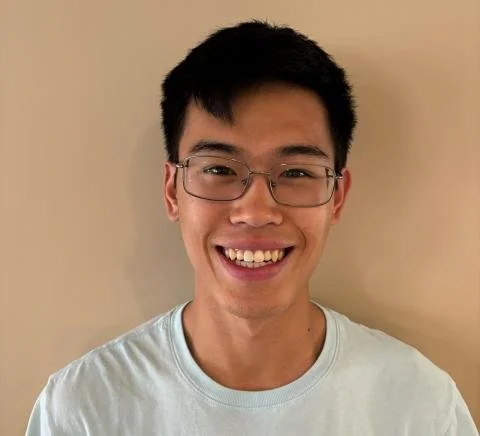
Jonathan Kho
Graduate Student
University of Virginia -

Md. Khairul Islam
Graduate Student
University of Virginia -

Walter Wang
Graduate Student
UT Austin -

Giti Doolabi
Graduate Student
University of Virginia -
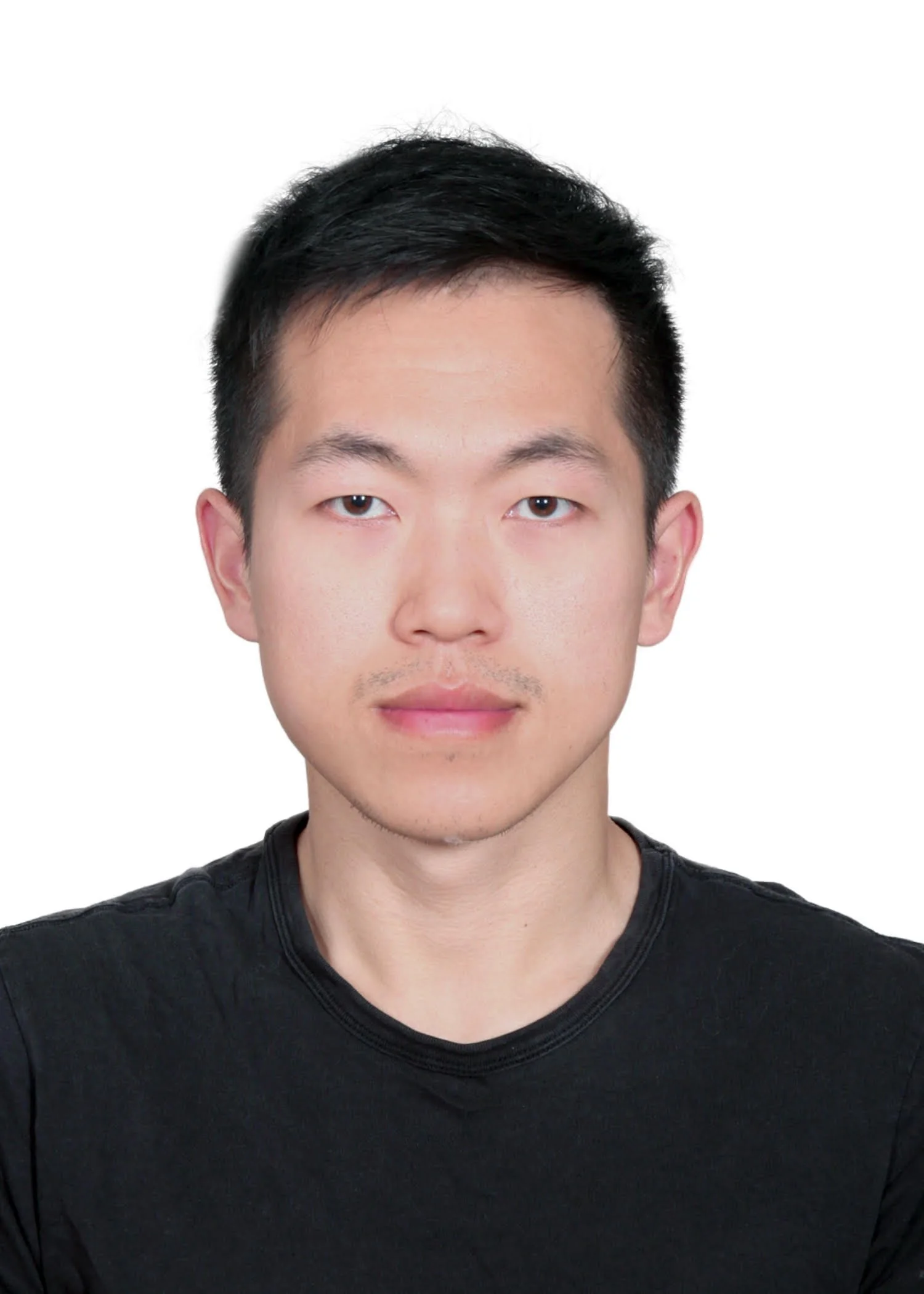
Saiyang Zhang
Graduate Student
UT Austin -
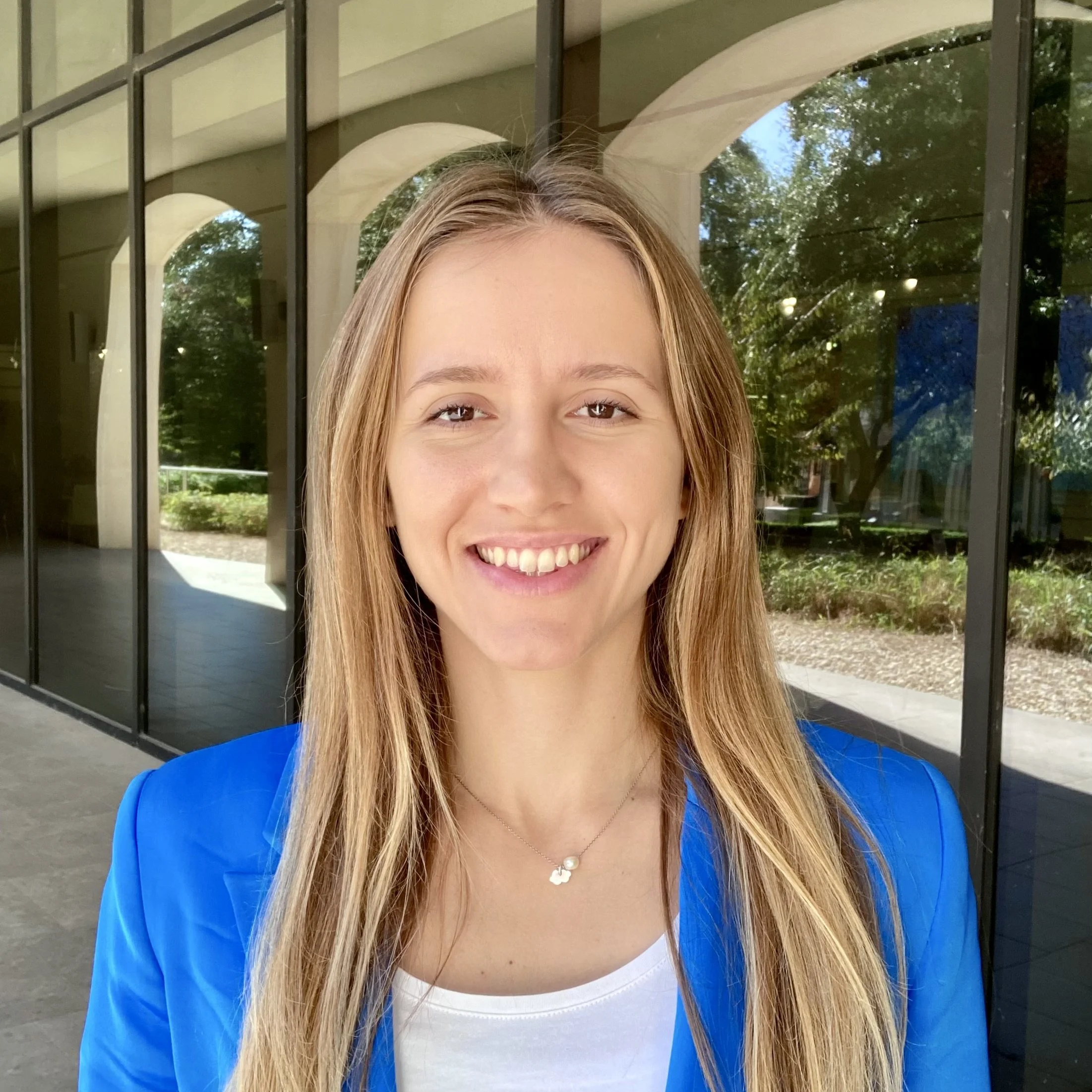
Nevena Gligić
Graduate Student
UT Austin -

Akhil Kotturi
Graduate Student
UT Austin -

Rahat Zaman
Graduate Student
UT Austin -

Yanbo Pan
Graduate Student
University of Virginia -

Shuting Xu
Graduate Student
Shuting Xu -
Pietro Carlotti
Graduate Student
UT Austin -

Mariangela Lisanti
Collaborator
Princeton University