Accelerated Universe
The Big Picture
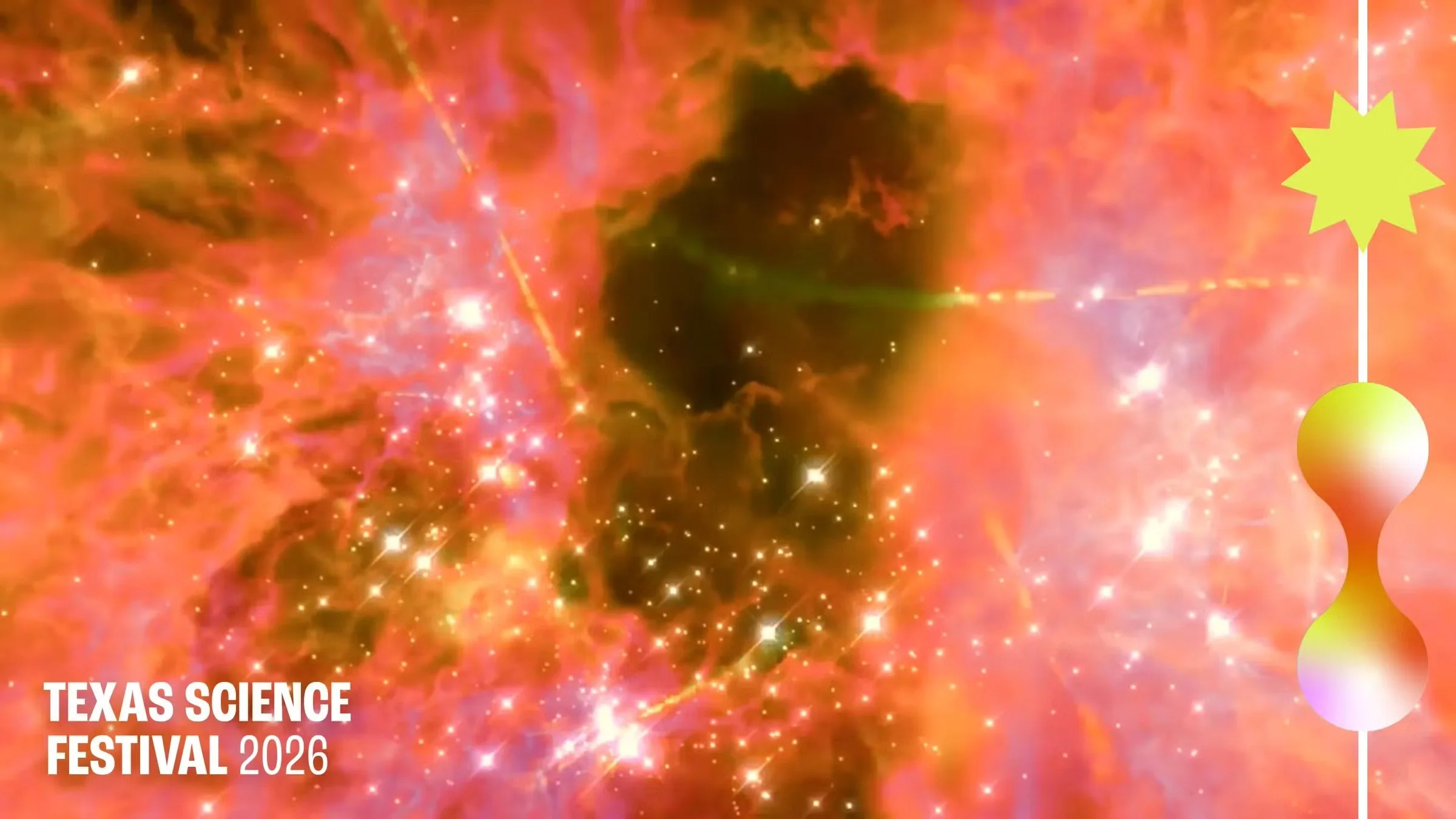
Stars and planets form within cold, dense clouds of gas and dust through complex interactions of physics and chemistry. Gas collapses, dust grains grow, and molecules form and break apart, shaping how material moves and how new worlds emerge. These clouds are extreme environments with huge variations in temperature, density, and scale—conditions that cannot be reproduced in a lab and that telescopes can only resolve in limited detail. Researchers in the Accelerated Universe working group are using advanced computer simulations to investigate how these extreme conditions influence the birth, evolution, and chemical makeup of stellar and planetary systems.
The chemistry inside such clouds involves 100s of species and 1000s of reactions, making computations prohibitively expensive. As a result, most existing simulations rely on simplified chemistry and fail to capture the full complexity of cloud evolution. They introduce significant errors that make quantitative comparisons with observations difficult, if not impossible. To address this, our team is developing AI-accelerated tools that capture the full chemistry with minimal additional computational cost. These methods use a combination of high-performance computing and machine-learning techniques to reliably and quickly predict the complex chemistry underlying the formation of stars and planets across a broad range of conditions.
By integrating these tools directly into simulations running on some of the world’s most powerful supercomputers, the team will track how gas, dust, and molecules evolve together. This will allow us to make more realistic predictions about where "prebiotic molecules"—the chemical precursors to life—appear, how dust and ice grow, and how the raw ingredients for stars, planets — and potentially life — distribute themselves across our universe.
Research Overview
The Accelerated Universe working group is addressing a central obstacle in astrophysical modeling: robustly and efficiently solving coupled systems of ordinary differential equations (ODEs) and partial differential equations (PDEs) that arise in multi-physics, multi-scale environments. Our team is developing stand-alone astrochemistry surrogates, algorithms for their robust coupling to modern hydrodynamic PDE solvers, and methods to propagate uncertainties from input parameters to quantities of interest. Together, these efforts aim to enable fast, accurate, production-level simulations of astrophysical systems like star-forming clouds and planet-forming disks.
Astrophysical systems span enormous ranges in space and time and are therefore extremely “stiff,” with macroscale hydrodynamics tightly linked to microscale astrochemistry. Their strong nonlinearities imply that uncertainties in microscopic parameters can drive large deviations in macroscopic predictions. Detailed chemical modeling is also essential since the chemical makeup of the gas feeds into radiative transfer calculations. Yet due to its prohibitive computational cost, current simulations either use reduced chemical networks (<40 species) or handle chemistry as a post-processing step. The former approach neglects key pathways for complex molecule formation, while the latter misses the real-time coupling between chemistry and dynamics. In addition, almost none of these workflows propagate known measurement uncertainties in the underlying reaction rates.
Our research addresses this gap by developing surrogate models that significantly lower runtimes while reliably capturing the underlying chemistry and true gas dynamics. To this end, we are constructing benchmarks that isolate the coupled hydrodynamic and astrochemical processes and evaluating existing surrogate approaches, such as encoder/decoder models. In parallel, we are developing structure-exploiting, derivative-informed surrogates that reproduce stiff chemical evolution at much lower cost and investigating strategies for their robust coupling with the hydrodynamic solvers. We also aim to exploit GPU capabilities and differentiable programming languages to accelerate traditional ODE solvers for use in high-fidelity benchmark codes.
An important step in our work will be to develop tools to address uncertainties in the ODE-level inputs—such as reaction pathways and reaction rates—and quantify how these uncertainties affect PDE-level quantities of interest, including temperatures and abundances. This work couples the ODE surrogate with state-of-the-art uncertainty-propagation methods and uses low-fidelity PDE simulations to perform sensitivity analysis of how PDE-level quantities respond to variations in the ODE parameters. By incorporating these capabilities directly into the solver, we can identify where uncertainties have the greatest impact and reduce the accumulation of large errors over many time steps.
The products of our research will be released through public modular codes that can interface directly with widely used simulation frameworks like GIZMO, enabling complex chemistry to be computed in situ within large-scale astrophysical simulations. These capabilities will allow astronomers to investigate the bigger questions like: How do galaxies, stars, and planets form? Where and when are the preconditions for life most likely to arise?
Projects
Astro Projects
-
Lead Scientist: Stella Offner
Building accurate surrogate models for astrophysical simulations requires physically realistic examples of how material in interstellar clouds evolves under different conditions. To this end, we are developing a suite of high-quality benchmark simulations using the GIZMO magnetohydrodynamic code. The initial suite includes three core problems: gravitational collapse of a spherical cloud, magnetized turbulence, and a molecular cloud forming stars.
Each setup includes realistic radiative heating and cooling, ensuring that the density and temperature evolve in a physically consistent way. In parallel, we are assessing the initial chemical abundances and reaction network choices used in the literature to ensure the molecular cloud benchmarks adopt realistic astrochemical parameters. These controlled, multi-fidelity simulations will provide rigorous datasets for training and validating surrogate models across a wide range of physical regimes.
-
Lead Scientist: Robin Garrod
Chemical models in astrochemistry rely on large reaction networks and expensive calculations to predict how molecules form and evolve in space. Surrogate models offer a faster alternative, and this project focuses on building the datasets needed to train and validate them.
We generate these datasets using inputs from 3D radiation magnetohydrodynamic simulations of star-forming regions and by comparing both detailed and simplified chemical networks. This allows us to test how well modern surrogate models capture key chemical behavior. By studying how uncertain inputs, such as reaction rates, influence the predicted abundances of molecules, we improve the reliability of chemical model predictions relative to observational data.
-
Lead Scientist: Varun Shankar
Operator learning for surrogate modeling offers a promising avenue to simulate complex astrophysical phenomena. We propose a scalable, provably-accurate framework that employs structure‐preserving operator learning through combinations of analytically-designed kernels judiciously weighted by neural networks. In our formulation, a surrogate operator is constructed as trainable shifts of kernels that each satisfy conservation laws, analytically-enforced boundary conditions, divergence‐free or curl‐free properties, and established boundary layer relationships. These kernels inherently support multiscale features and capture turbulence energy cascade conditions. Our proposed method naturally forms the core of an operator-valued Gaussian process, enabling both generative modeling and uncertainty quantification.
This integrated approach will deliver computational efficiency while rigorously preserving physical laws, advancing the fidelity and interpretability of astronomical simulations. By bridging data‐driven techniques with principled physics constraints, our proposed approach will address critical challenges in modeling nonlinear, high‐dimensional astrophysical systems and promises to transform predictive accuracy in astronomical research and drive scientific discovery
AI Projects
-
Lead Scientist: Stella Offner
Chemical processes in the interstellar medium regulate heating, cooling, and ionization, making chemistry essential for modeling gas dynamics. Because solving large chemical networks is computationally intensive, we are developing fast surrogate models to replace direct integration in hydrodynamic simulations. We are exploring encoder/decoder architectures trained on networks with hundreds of species. These models can speed up abundance calculations by a factor of ~1000 compared to traditional chemical solvers.
-
Lead Scientist: George Biros
Simulating astrochemical evolution requires solving large systems of nonlinear ODEs whose behavior changes across a wide range of physical conditions. Building surrogate models that remain accurate throughout this parameter space is difficult, and few existing approaches offer reliable performance guarantees. Our current work focuses on developing a simple but robust baseline method using nearest-neighbor interpolation, enhanced by sensitivity information that helps track how key outputs change with physical parameters. While this approach is not designed to speed up a single chemical calculation, it becomes highly efficient when many ODE systems must be evaluated at once, as in coupled hydrodynamics–chemistry simulations. The aim is to build a robust, state-of-the-art baseline for evaluating other surrogate models.
-
Lead Scientist: Omar Ghattas
Astrophysical simulations combine complex physics, including magnetohydrodynamics, gravity, and radiation transport, with detailed astrochemistry. Our goal is to study how these large PDE systems interact with the chemistry surrogates that replace costly chemical calculations.
Because full hydrodynamic codes such as GIZMO are sophisticated and expensive to run, we first build a simplified proxy model using standard model reduction techniques applied to snapshots of the full simulation. Using the proxy greatly accelerates turnaround time, enabling rapid experimentation. It includes the chemical coupling term and provides a controlled setting for developing and testing algorithms that assess the stability and quantify the uncertainty of surrogate ODE models.
Publications/Works in Progress
Inverse problems for history-enriched linear model reduction
Vijaywargiya, A., Biros, G.
HATANN: High-dimensional Approximation using Taylor expansions and Adaptive Nearest Neighbors (in process)
Longaker, B., Biros, G.
Modeling turbulent and self-gravitating fluids with Fourier neural operators
Poletti, K., Offner, S., and Ward
Team
-

Stella Offner
PI & Astro Lead
UT Austin -

George Biros
PI & AI Lead
UT Austin -

Omar Ghattas
Senior Personnel
UT Austin -

Keith Hawkins
Senior Personnel
UT Austin -
Lauren Ilsedore Cleeves
Senior Personnel
University of Virginia -

Robin Garrod
Senior Personnel
University of Virginia -
Munan Gong
Senior Personnel
UT El Paso -

Luke Smith
Senior Personnel
TACC -

Arjun Vijaywargiya
Postdoctoral Scholar
UT Austin -
Melisse Bonfand-Caldeira
Postdoctoral Scholar
University of Virginia -

Ben Longaker
Graduate Student
UT Austin -

Rafia Rizwana Rahim
Graduate Student
UT Austin -
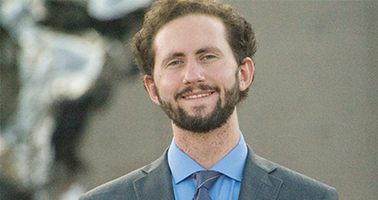
Noah Reef
Graduate Student
UT Austin -
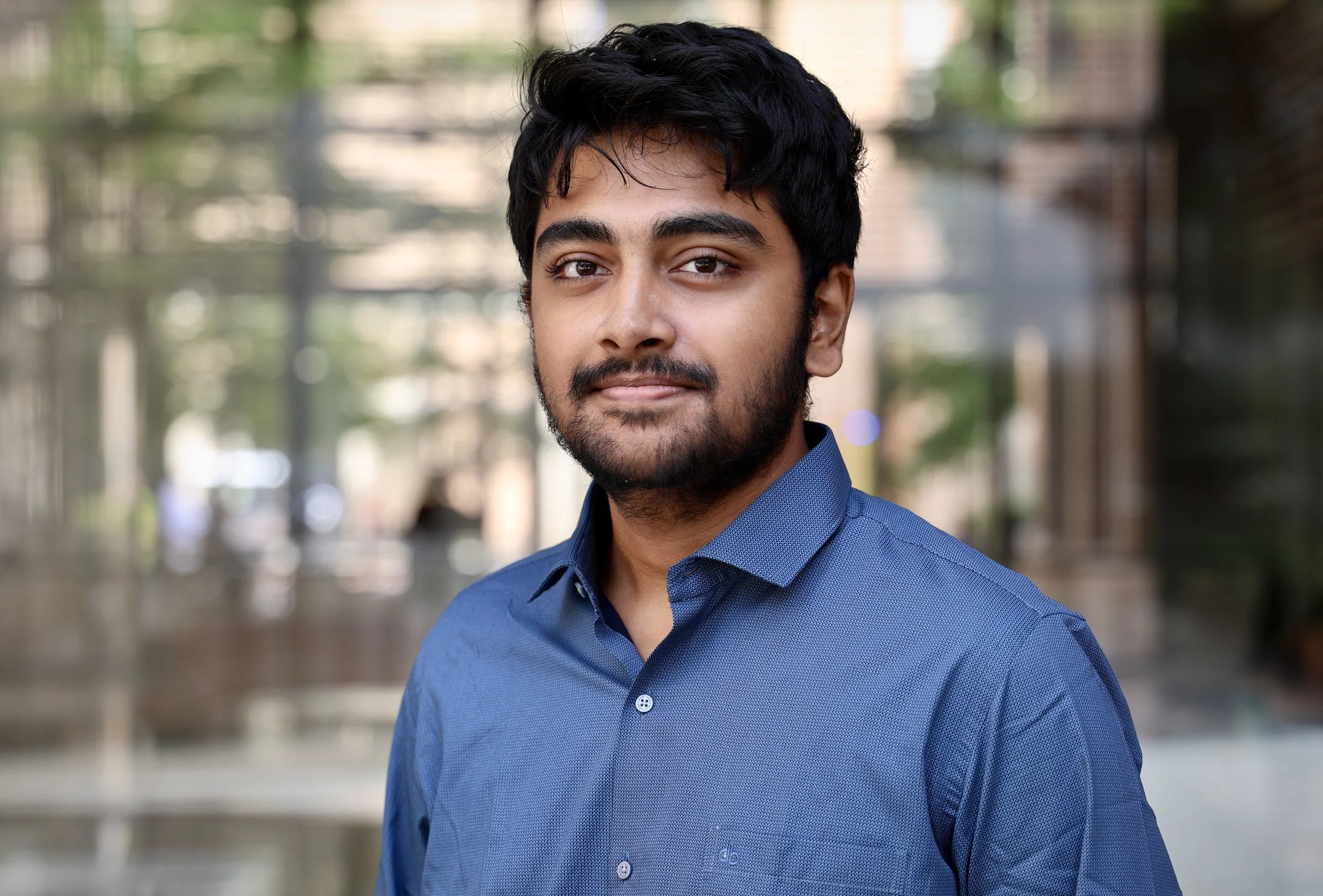
Skandan Subramanian
Graduate Student
UT Austin -

Prajwal Prathiksh
Graduate Student
UT Austin -

Gail Zasowski
Collaborator
University of Utah -

Vladislav (Vlad) Krendelev
Collaborator
TACC -

Rachel Ward
Collaborator
UT Austin -

Jack Dongarra
Collaborator
University of Tennessee -

Amir Shahmoradi
Collaborator
UT Arlington -

Varun Shankar
Collaborator
University of Utah -
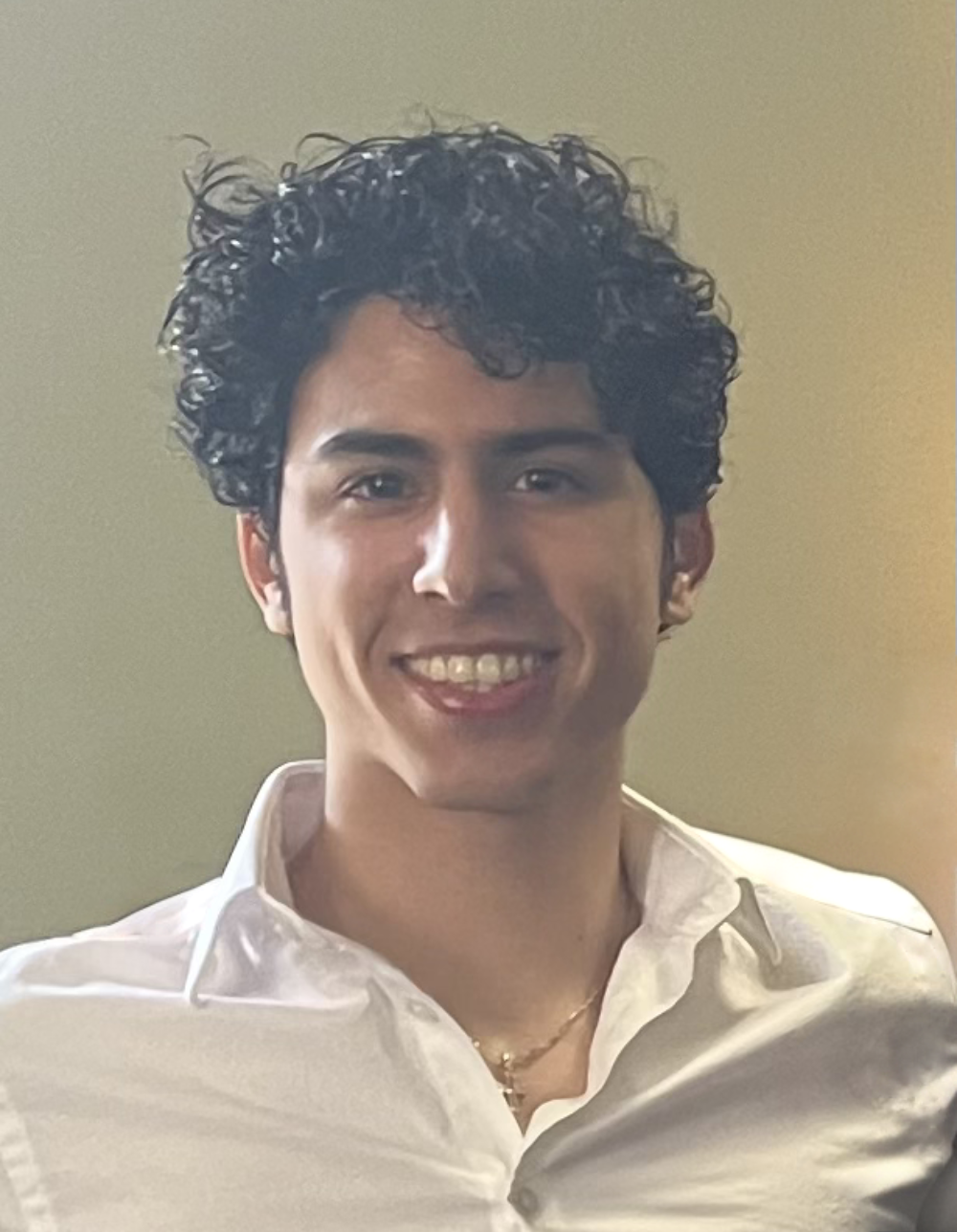
Carlos Ortega
Collaborator
UT Austin -
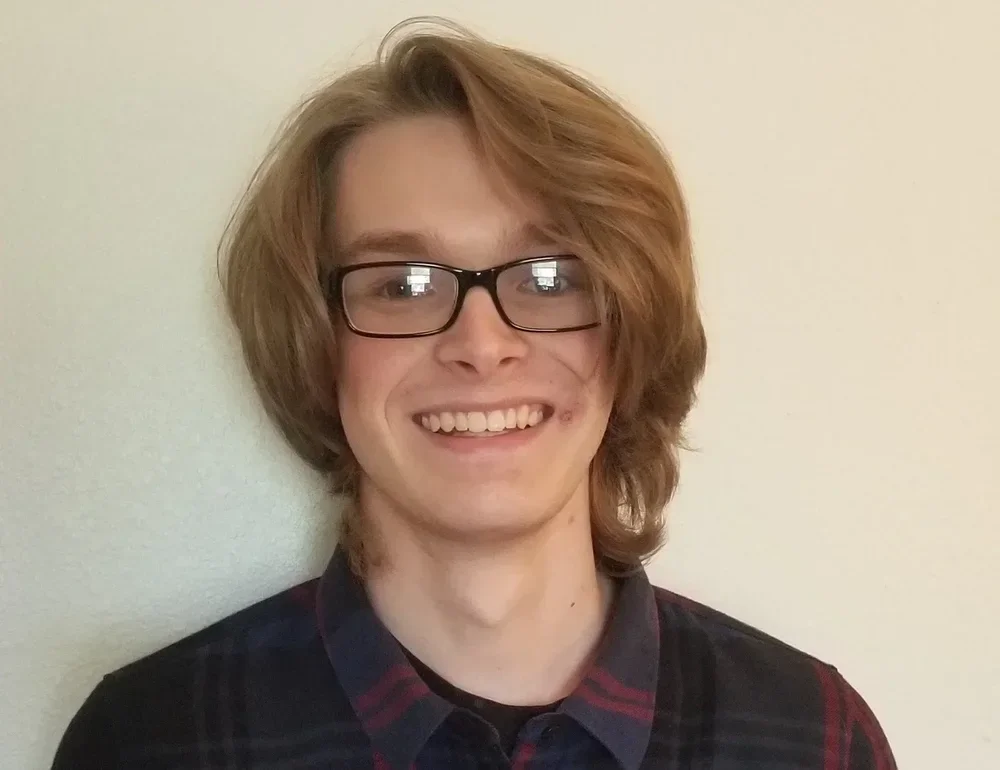
Keith Poletti
Collaborator
Institute of Science and Technology Austria