Workshop at UVA on Generative AI in Secondary STEM Classrooms
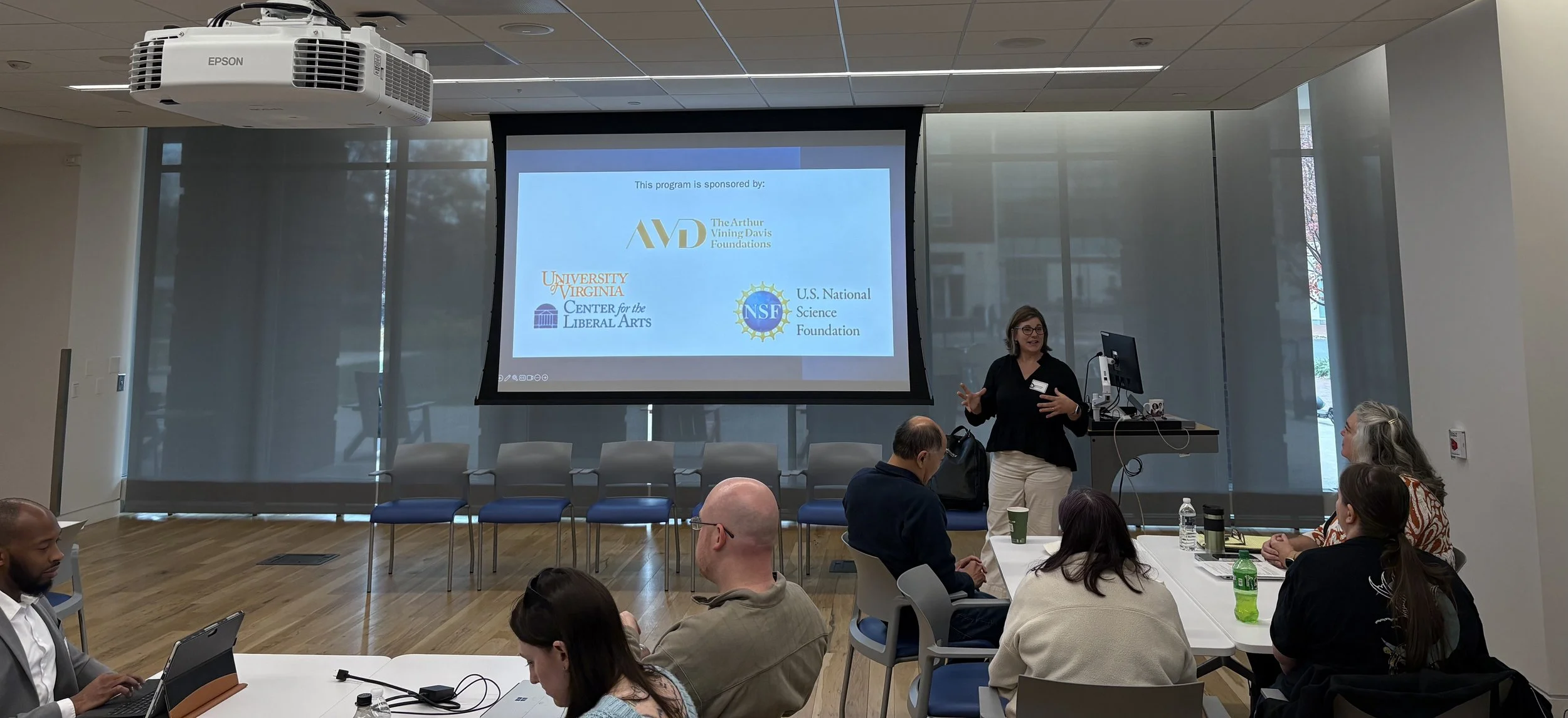
On November 15, the University of Virginia’s Center for the Liberal Arts hosted a full-day workshop on Generative AI in Secondary STEM Classrooms. The event brought together middle and high school STEM teachers seeking practical ideas for using AI in their classrooms while keeping teaching grounded, ethical, and student-focused. The workshop ran from late morning into the afternoon and created a space where teachers could learn directly from faculty who are thinking deeply about AI’s role in math, science, and engineering education.
Paul Torrey’s Session: A Scientist’s View of AI
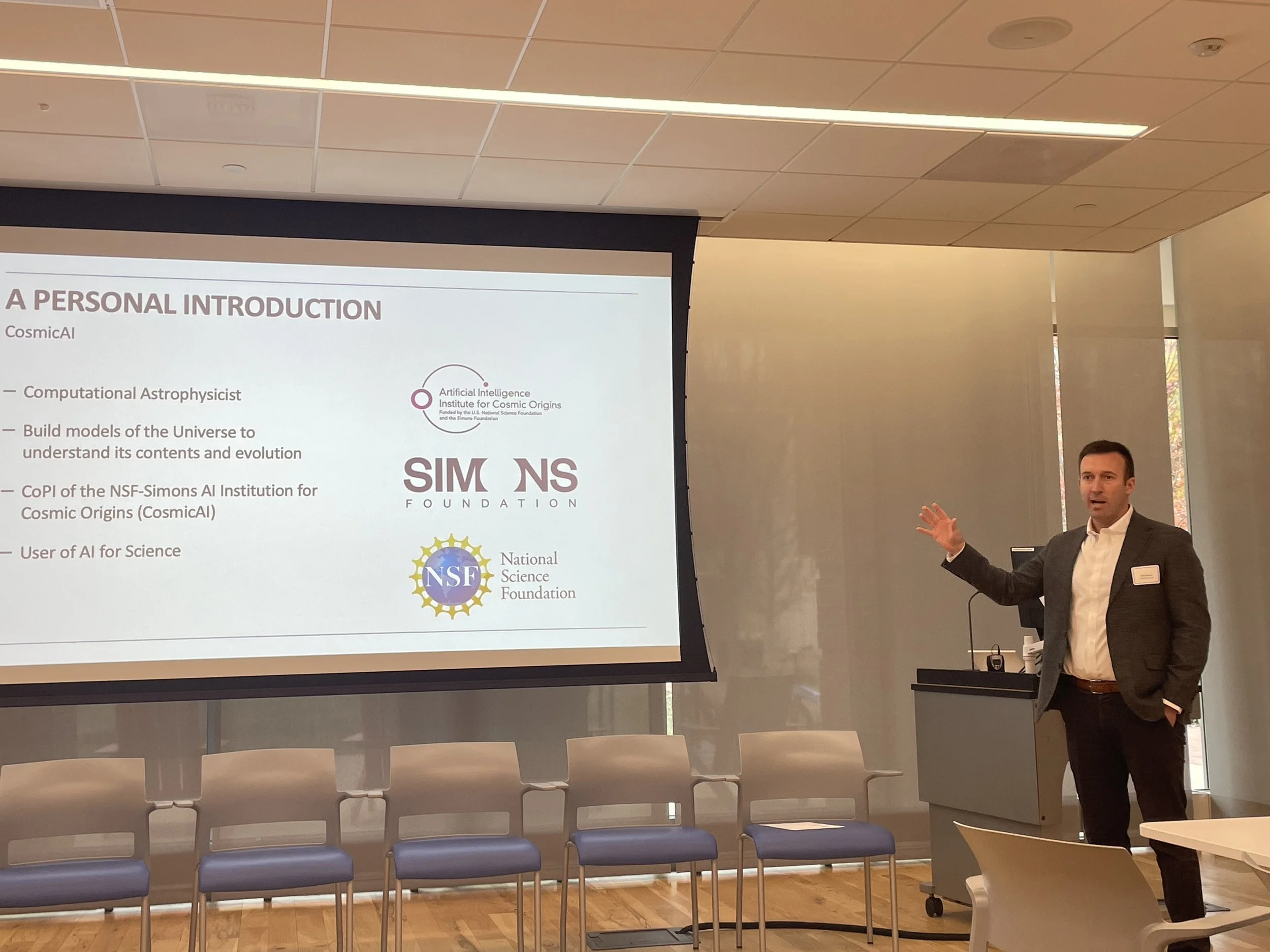
Paul Torrey, a University of Virginia faculty member and Co-PI of the NSF–Simons CosmicAI Institute at UT Austin, opened the workshop with a scientist’s introduction to AI — a clear, engaging walk-through of how modern AI systems actually work, where they came from, and why they matter for STEM fields.
Bringing AI Into STEM Teaching
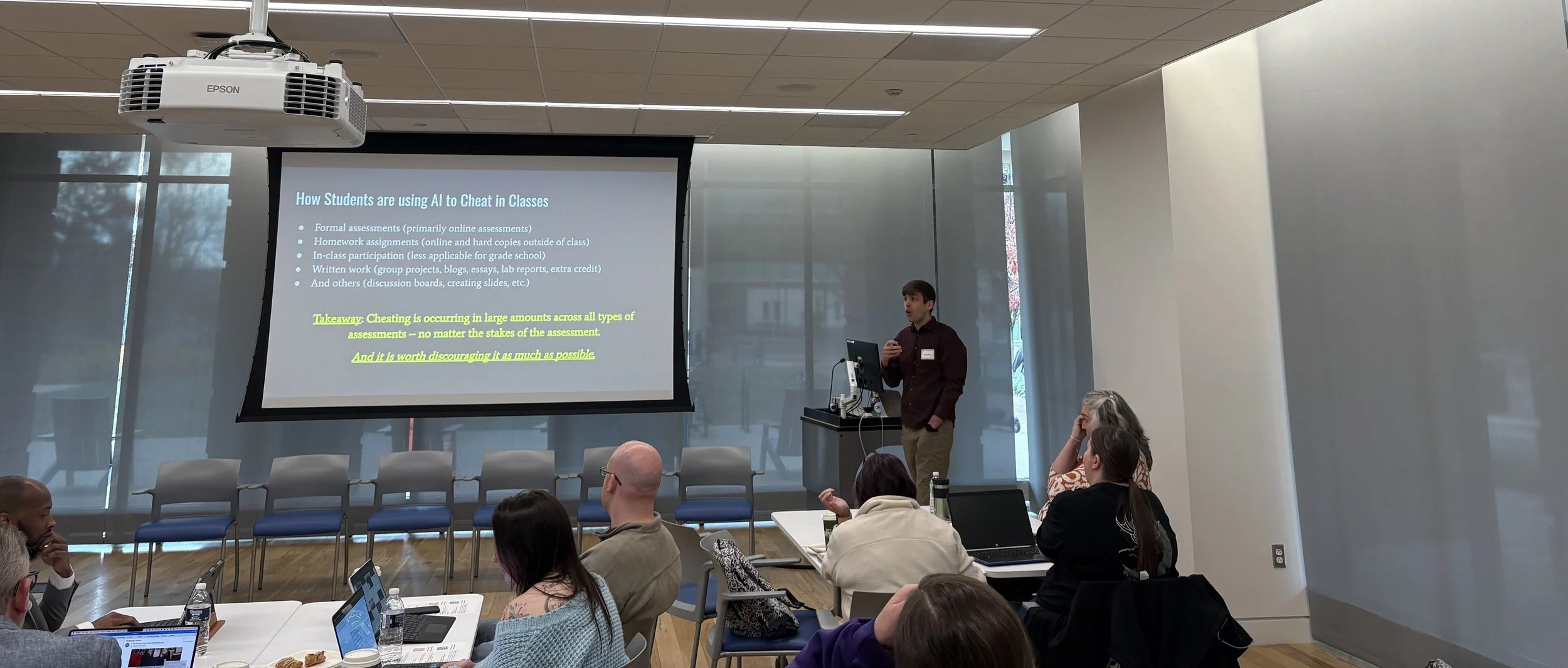
Following Torrey’s talk, the workshop moved into sessions focused on instruction and classroom design. Natasha Heny discussed ways to build lessons that meet diverse student needs while using AI tools responsibly. Kemi Jona led a reflective session that asked participants to grapple with both the benefits and the risks of AI in learning. Matthew Pryal spoke about academic integrity and how AI tools are reshaping assessments.
After lunch, teachers split into discipline-specific sessions covering web-based interactive math, using AI as a teaching assistant, and inquiry-based AI-integrated science activities. These sessions gave teachers hands-on examples they could bring directly into their classrooms.
A panel of faculty closed the day, offering honest discussion about how AI is changing STEM learning, how to manage concerns about plagiarism, and how teachers can help students build real understanding even with new tools at their fingertips.
A Useful Day for STEM Teachers
Teachers left with clearer insight into the science behind AI, new strategies for designing lessons and assessments, and practical examples of how to integrate AI tools into math and science courses. They also received certificates of attendance and follow-up materials to support ongoing classroom use.
The workshop succeeded in providing educators with both the “big picture” of AI and the everyday strategies they need to guide students through an era in which AI is rapidly becoming part of the STEM toolkit. Torrey’s opening session connected cutting-edge research from places like CosmicAI with real classroom needs, helping anchor the day and giving teachers a strong starting point for understanding AI’s role in STEM education.